Digital promotions can also connect different customer touchpoints. The same campaign can be promoted through the supermarket’s app, website, email, social media, or QR codes at the point of sale, connecting the digital experience with in-store visits and purchases.
In this article, we’ve put together promotion ideas for supermarkets and grocery chains based on real campaigns. We’ll explore different mechanics and objectives to help you identify which approaches best fit your marketing strategy.
What Promotions Can a Supermarket Run?
The right promotion depends mainly on what the supermarket wants to achieve at a given moment. A supermarket or grocery chain can, for example, create campaigns to:
- Drive visits to stores with promotions that unlock when customers arrive at a participating location.
- Encourage purchases by rewarding customers who buy specific products or reach a minimum spend.
- Build customer loyalty with prizes, coupons, digital stamp cards, or recurring campaigns.
- Activate loyalty program members with exclusive promotions and benefits.
- Increase use of the supermarket app by integrating games, giveaways, and other promotions directly into it.
- Promote products, categories, or brands through interactive mechanics that give them greater visibility.
- Collect customer data and learn more about shoppers through registration forms, surveys, or quizzes.
- Generate social media engagement with giveaways and other campaigns designed for the supermarket’s online community.
With Easypromos, it is possible to create these types of promotions and adapt them to different channels and stages of the customer journey, from an open social media campaign to an exclusive promotion for customers who are physically shopping in one of the stores.
Let’s look at eight real supermarket promotion examples that show how these objectives can be put into practice.
Supermarket Promotion Examples
1. Drive Store Visits with Geolocated Promotions
Grocery chains can run promotions that are only accessible to customers who are physically present at one of their stores. This turns the store visit itself into a requirement for participation.
With Easypromos participant geolocation, users access the promotion from their mobile device and allow their location to be checked. The system verifies whether they are within the predefined area around one of the participating stores. Once their location has been validated, they can enter a giveaway, spin a prize wheel, participate in a Scratch & Win, access a Digital Stamp Card, or another promotion.
For example, a grocery chain could use geolocation to make an in-store visit a requirement for entering a promotion. The campaign could be promoted through social media, newsletters, the website, and in-store materials, while participation remains exclusive to customers who are physically at one of the stores. Customers check in from their mobile device and, once their location is verified, are automatically entered into a random drawing for 10 grocery baskets full of premium products. This way, the promotion can generate interest before the visit and help turn that interest into actual foot traffic.
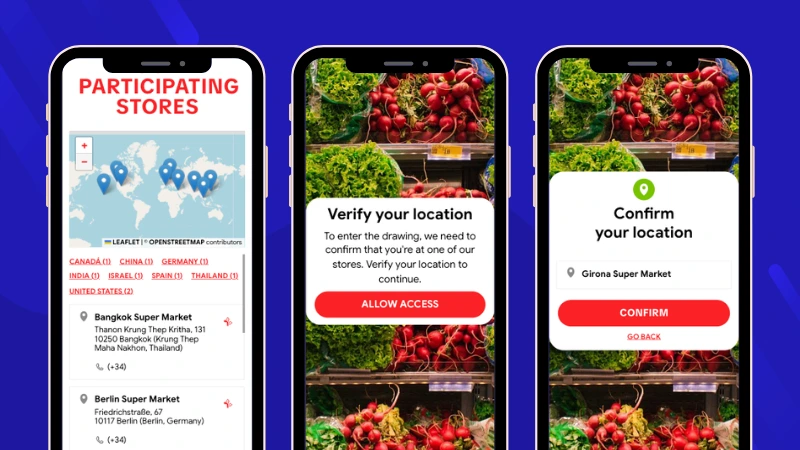
This type of promotion rewards customers who actually visit the store and can help drive in-person traffic. A single campaign can also include multiple locations across a grocery chain and associate each participation with the corresponding store.
2. Encourage Purchases with Receipt-Based Promotions
Promotions can also encourage customers to spend more or purchase specific products. For example, you can reward shoppers who buy a particular product or category, or whose purchase reaches a minimum spend.
With Easypromos, you can create promotions where participants upload a photo of their receipt to prove that their purchase meets the campaign requirements. AI Receipt Validation can automatically check information such as the store, purchase date, total amount, and whether specific products appear on the receipt.
Once the purchase has been validated, customers can enter a giveaway, discover an instant prize, receive a coupon, or access another interactive promotion.
Alimerka, a Spanish supermarket chain, brought back its Yellow Days with a summer campaign combining promotions, prizes, and giveaways to maintain customer interest over several weeks. One of the main promotions gave away two Vespa scooters, one in July and another in August. Customers qualified by spending more than €40 and purchasing at least one product from a participating brand, then uploading their receipt to enter. The campaign shows how a seasonal promotion can encourage spending, increase average transaction value, give participating brands additional visibility, and maintain engagement throughout the summer.
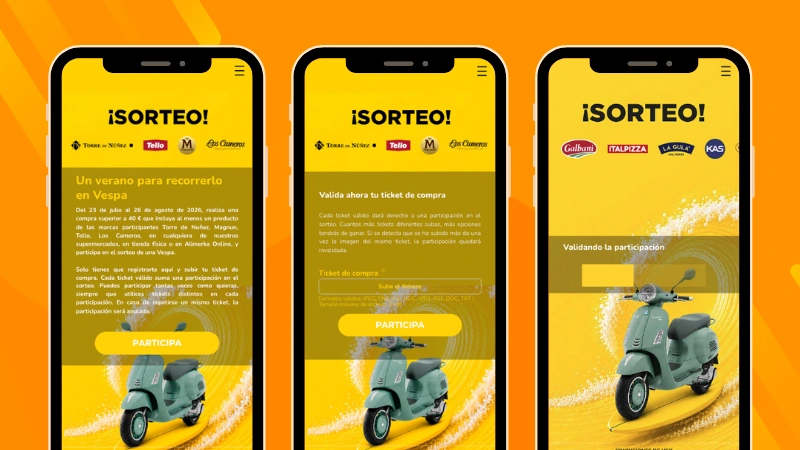
Receipt-based promotions connect participation directly to a verified purchase. They are particularly useful for driving sales in specific categories, supporting product launches, or running joint campaigns with supplier brands.
3. Build Customer Loyalty with Recurring Promotions
Not every promotion has to focus on a single interaction. Supermarkets can also use recurring promotions to maintain an ongoing relationship with customers and reward repeat purchases or participation.
Digital Stamp Cards are particularly well suited to this objective. Customers collect stamps whenever they complete a predefined action, such as visiting the store, making a purchase, or buying selected products. Once they complete the card, they can unlock a prize, discount, or entry into a giveaway.
For example, a supermarket can use a Digital Stamp Card to reward repeat purchases. For every €20 spent, the customer receives a stamp on their card. They simply upload their receipt, which is automatically validated using AI technology. This digitizes a classic loyalty mechanic while directly connecting each customer’s actual spending with rewards.
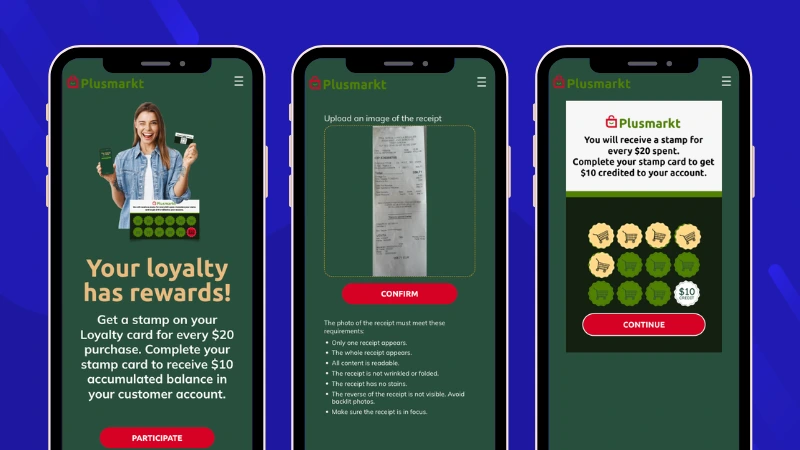
Recurring campaigns can also incorporate games, instant prizes, coupons, or giveaways, giving customers new reasons to keep interacting with the brand.
For recurring campaigns, you can also turn the promotion into a Progressive Web App (PWA). Customers can add it to their mobile home screen for quick access, making it particularly useful for long-running promotions or campaigns designed for repeat participation.
4. Offer Exclusive In-Store Promotions to Customers
Supermarkets can use the point of sale to offer promotions exclusively to customers. Reserving certain giveaways, prize games, coupons, or other benefits for in-store shoppers can add value to the shopping experience and encourage return visits.
The point of sale can become the main channel for promoting the campaign. Signage, shelf displays, QR codes, and materials positioned next to selected products can direct shoppers to giveaways, prize games, coupons, instant prizes, and other exclusive promotions.
These campaigns can also be linked to specific products or categories. For example, a promotion might support a seasonal product launch, feature a partner brand, or run within a particular section of the store, giving shoppers an additional reason to participate during their visit.
If the promotion includes a registration form, you can also collect participant data and request consent for future marketing communications with Easypromos. This means an in-store campaign can both reward existing customers and help build a first-party database for future promotions, according to the consent provided by each participant.
Veritas, a Spanish supermarket chain specializing in organic food, ran a promotion to encourage purchases of its gazpacho products and engage its regular customers. Shoppers who purchased two units could access a Spin the Wheel promotion through the brand’s app, with prizes including a trip to Menorca. The campaign was supported by prominent point-of-sale materials, including freestanding displays, shelf signage, and other promotional materials.
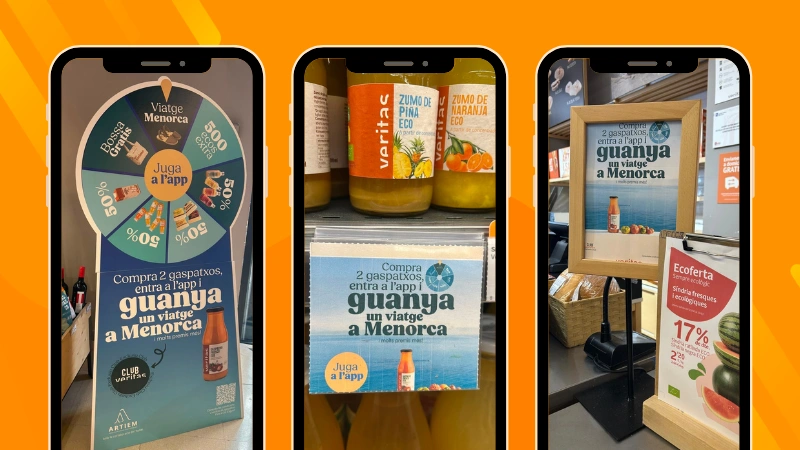
This approach goes beyond generating a single participation. It can enhance the shopping experience, strengthen relationships with regular customers, and give shoppers new reasons to return.
Explore more ideas and solutions for promotions in the food and beverage industry.
5. Reward Loyalty Program Members Through the Supermarket App
If a supermarket has its own app or loyalty program, promotions can reward members while increasing engagement with these channels. Grocery retailers can regularly offer games, giveaways, Spin the Wheel promotions, or member-only campaigns. Incentives can also be offered on special dates, anniversaries, or other relevant occasions to reward specific customer segments.
With Easypromos, you can integrate promotions directly into the supermarket’s app, allowing customers to participate without leaving it. Easypromos can also integrate with the grocery chain’s user system so customers who are already logged in can access the promotion already identified, avoiding an additional registration step and creating a more seamless participation experience.
For example, a supermarket can integrate an interactive Puzzle directly into its app to encourage usage while giving customers an immediate benefit. The game is featured within the app, and participants receive a discount on their next purchase after completing the puzzle. This approach can increase interaction with the app, give greater visibility to product launches or specific products, and encourage customers to return to the store and make another purchase.
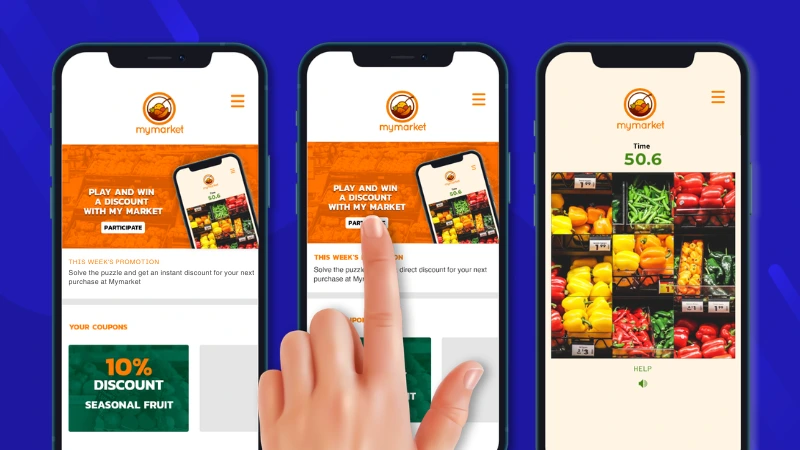
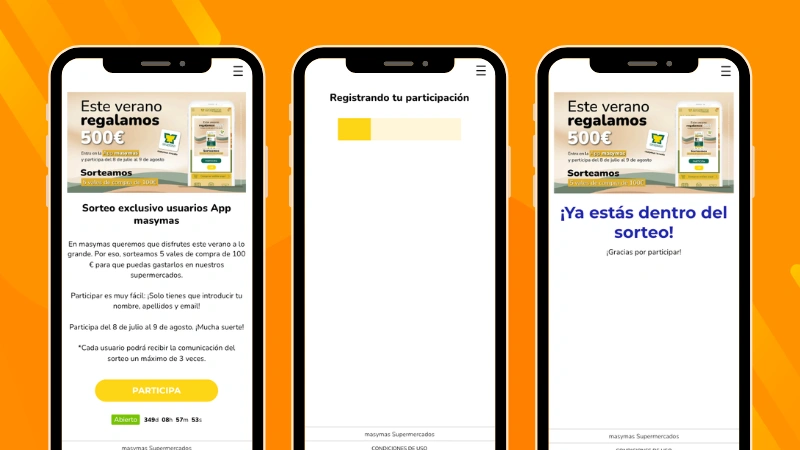
Another example comes from masymas, a Spanish supermarket chain, which used an app-exclusive giveaway to encourage customers to use this channel. Customers who registered for the promotion through the app entered a random drawing for five €100 shopping vouchers. It’s a simple way to make the app the gateway to an exclusive benefit and encourage greater adoption among regular customers.
6. Give Products, Categories, and Brands More Visibility with Interactive Games
Supermarkets manage extensive product catalogs and often need to draw attention to particular categories, new products, or seasonal ranges. Interactive promotions provide a more engaging way to do this than relying solely on informational content or advertising.
You can create games such as Puzzles, Memory games, quizzes, Hidden Objects, and skill-based games in which the product or brand becomes part of the experience itself. For example, a campaign might encourage customers to discover a new product range, identify different products, or answer questions about a particular category.
This approach is also useful for campaigns developed with manufacturers and brands sold by the supermarket, combining product visibility, entertainment, and incentives in a single activation.
Supermercados MAS, a Spanish supermarket chain, used an interactive Word Search to give greater visibility to Sherry wines and introduce customers to the category in a more engaging way. Participants had to find words related to Sherry for the chance to win a visit to the González Byass winery. The promotion combined content with entertainment: the game familiarized participants with key concepts related to the product category, while the prize provided a relevant incentive to complete the experience.
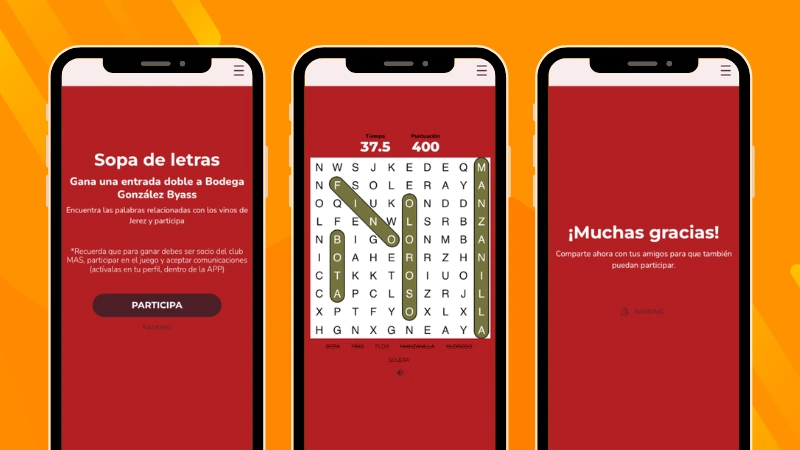
Instead of appearing only as a prize or advertising element, the product becomes an active part of the promotional experience.
7. Collect Data and Learn More About Your Customers
Promotions can also provide an opportunity to learn directly about their consumers, as long as data collection is transparent and connected to an experience that provides value in return.
Registration forms can collect the information required for the campaign and request the appropriate consent. You can also incorporate surveys, quizzes, and other questionnaires to learn more about participants’ interests, habits, and preferences.
For example, a grocery retailer could ask customers which categories they purchase most frequently, which products they would like to see in stores, their shopping or consumption habits, or which types of promotions interest them most.
Sadival, a Spanish company specializing in Christmas gift baskets and corporate gifts, used a customer satisfaction survey to gather feedback about its service. To encourage responses, everyone who completed the survey entered a random drawing to win an Iberico ham. The campaign combined a relevant incentive with a survey to encourage participation and obtain useful information directly from customers. Participants also completed a registration form, allowing Sadival to collect customer data as part of the campaign.
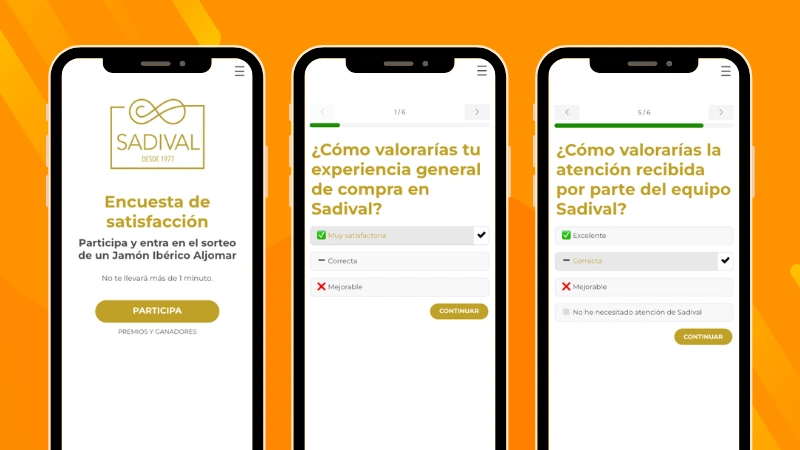
The key is to use the responses to better understand your audience while only requesting information in the registration process that has a clear purpose for your customer database.
8. Generate Social Media Engagement with Giveaways
Social media is another important channel for activating a supermarket’s community. Social media giveaways can encourage comments and generate conversation around products, seasonal events, store locations, or special campaigns.
With Easypromos, it is possible to run Instagram Giveaways, select winners from comments on Facebook posts and Reels, or combine participation from Instagram and Facebook in a Multi-Network Giveaway. This gives grocery retailers flexibility to adapt the campaign to the social channels where their communities are most active.
Recent campaigns from grocery retailers show how varied these activations can be. dm Romania, the Romanian division of the European drugstore retailer dm, ran a Back to School Instagram Giveaway featuring a themed product kit. Safeer Market, a supermarket and hypermarket brand in the UAE, invited its Instagram community to comment for the chance to win one of four hotel staycations in Dubai. Meanwhile, Tiss Market Brașov, a Romanian grocery retailer, used a Facebook Reel to give away a 500 lei shopping voucher, asking participants to comment with the store where they would prefer to spend it.
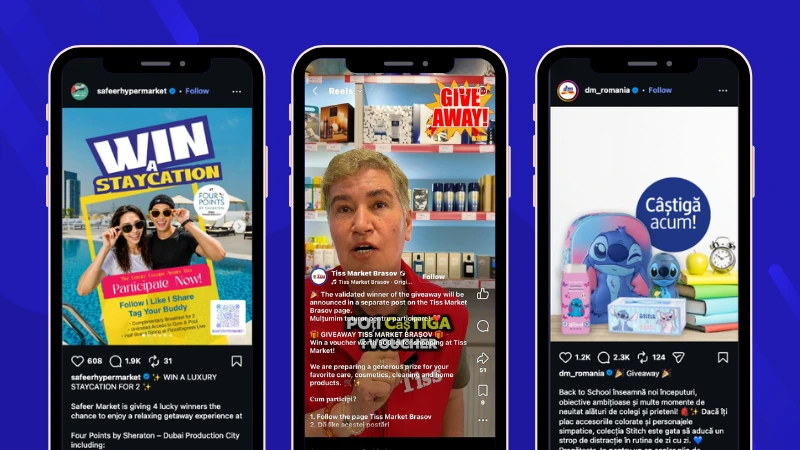
These examples show how supermarkets and grocery retailers can use social giveaways for different objectives, from highlighting seasonal products and offering experiences to promoting store locations and shopping vouchers. The participation prompt can also be tied directly to the campaign, giving customers something relevant to respond to rather than asking for a generic comment.
Conclusion
Digital promotions can turn different moments in the customer journey into opportunities for interaction, both in-store and across other channels. The key is to create an engaging experience with a relevant incentive and make participation as easy as possible.
With Easypromos, supermarkets and grocery chains can create promotions for different objectives, integrate them with their existing customer channels, and manage participation from a single platform.
Have a supermarket promotion in mind? Request a video call with our team to discuss your objectives and find the right approach for your campaign.

Supermarket Promotion FAQs
Supermarkets can run giveaways, interactive games, instant prize promotions, coupons, Digital Stamp Cards, contests, and receipt-based promotions. The right format will depend on the objective, whether that’s driving store visits, encouraging purchases, building customer loyalty, promoting products, or collecting customer data.
One option is to link participation to a purchase. For example, customers can upload their receipt to verify that they have reached a minimum spend or purchased specific products. Once the purchase is validated, they can enter a giveaway, discover an instant prize, receive a coupon, or access another incentive.
Recurring promotions can reward regular customers and give them reasons to return. Supermarkets can use Digital Stamp Cards, coupons, recurring giveaways, prize games, or exclusive benefits for loyalty program members.
Supermarkets can use exclusive in-store promotions or geolocated campaigns that require customers to be physically present at a participating location. These campaigns can be promoted through QR codes, signage, shelf displays, digital screens, and other communication channels.
Promotions with registration forms can collect the information needed to manage participation and, where appropriate, request consent for future marketing communications. Surveys and quizzes can also help supermarkets learn more about customers’ interests and preferences.
Easypromos provides detailed statistics to analyze campaign performance, including the number of participants and participations, traffic sources, devices used, and participation over time. Depending on the campaign, you can also analyze data specific to the mechanic. These insights can help identify which channels, formats, and incentives performed best and apply those insights to future promotions.