For marketing teams, this creates a practical way to capture valuable data in a transparent and compliant way. By combining digital games with incentives such as prizes or rewards, brands can motivate users to share their data while creating a more engaging experience.
From social media users to zero-party data
Social media platforms offer reach, but they also come with limitations such as algorithm changes, reduced organic visibility, or restricted access to user data. For this reason, capturing and managing your own audience data is essential.
Zero-party data refers to information that users intentionally share with a brand, such as their email address, preferences, or interests. It is collected with explicit consent and allows you to build direct, long-term communication with your audience.
Social media games provide a practical way to capture this data. Users participate in the experience and, in exchange, complete a registration form where they share their information.
With Easypromos, you can configure these forms to collect the data you need, such as name, email, location, or preferences. You can also include:
- acceptance of terms and privacy policy
- optional marketing consents (email, SMS, or messaging apps)
- segmentation fields to organize data in your CRM
You can also connect these campaigns with Instagram Messaging Automations. For example, when a user interacts with your content on Instagram, they can automatically receive a direct message with seamless access to the game or registration form. This helps move users from social media into a controlled environment where participation and data capture take place.
Types of social media games for different campaign goals
Not all social media games serve the same purpose. The type of game you choose should depend on your campaign objective, whether it’s maximizing participation, educating users, or collecting specific data.
With Easypromos, you can create different types of interactive games without development, using ready-to-customize formats adapted to each use case. The most common categories include:
- Picture games (puzzle, memory, hidden objects)
- Skill-based games (tap tap, match games, reflex-based challenges)
- Word games (word search, crossword, word shuffle)
- Quizzes (knowledge tests, preferences, or product recommendation flows)
Each format offers a different level of interaction and data capture potential. In the following sections, we explore how these game types work and when to use them.
Picture games
Picture games are highly visual formats that keep users focused on branded content throughout the experience. Because participants interact directly with images, these games increase attention time and reinforce brand recognition.
A common use case is campaigns where visual elements are central, such as product showcases, seasonal themes, or brand storytelling.
For example, the Cat (heavy construction equipment) dealership WesTrac Australia launched an Easter campaign using a Hidden Objects game. The promotion was shared on Instagram and Facebook, with reminder posts to drive participation and a final announcement of the winners.
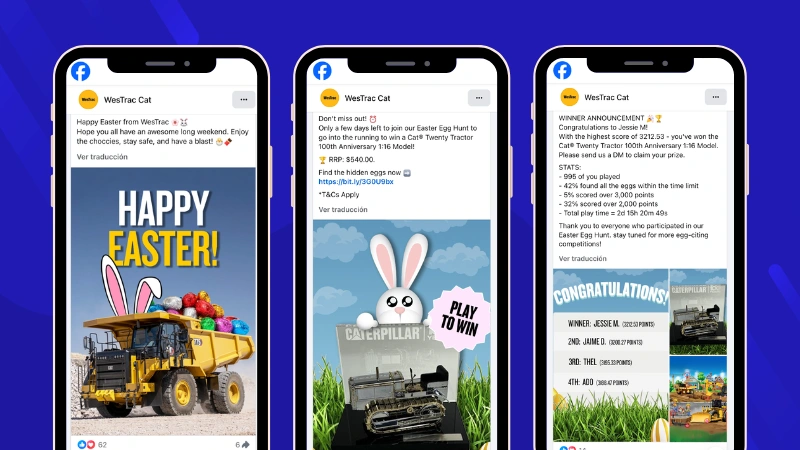
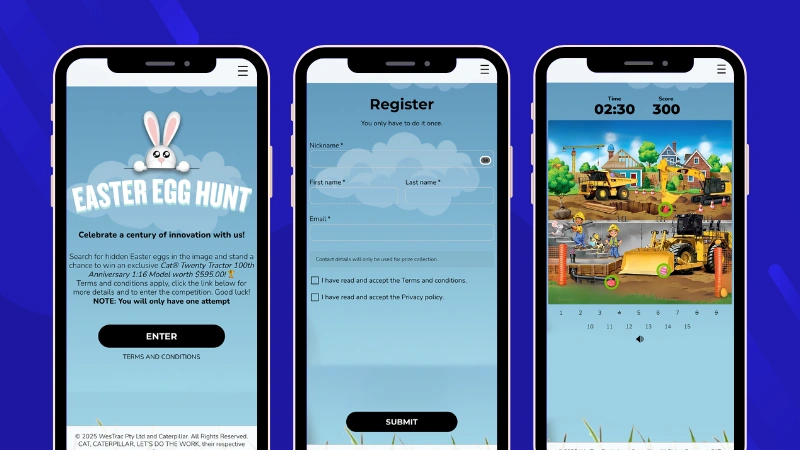
In the game, users had to find 15 Easter eggs hidden within a construction-themed image in under 3 minutes. The fastest participant among 995 players won a branded model tractor valued at AUD 540.
This type of game works well when:
- you are running seasonal or thematic campaigns
- you want to highlight visual assets or products
- you aim to increase time spent interacting with your brand
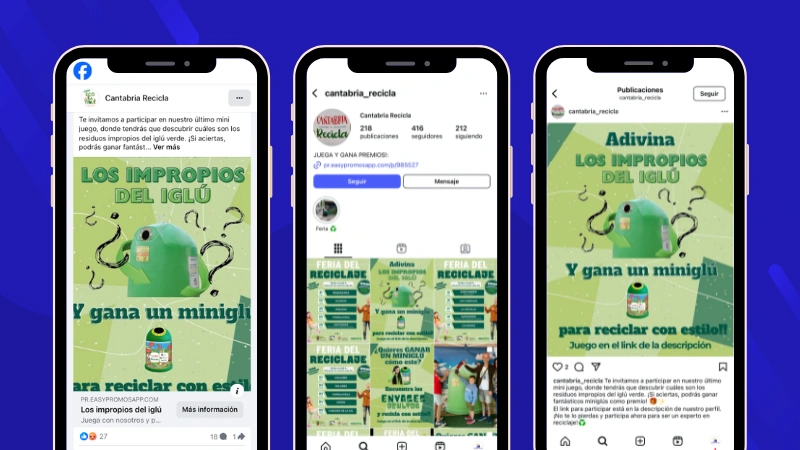
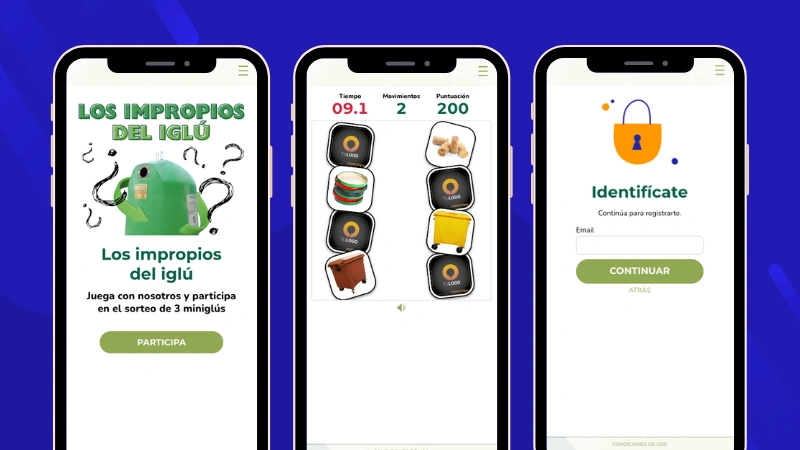
Another example of a picture-based game is this Match It campaign by Ecovidrio, a non-profit organization responsible for glass recycling in Spain. The campaign was promoted through repeated posts on Facebook and Instagram to drive participation.
In the game, users had to match different waste items with the correct recycling bin. The mechanic was simple but effective, combining gameplay with an educational objective.
Participants could play multiple times, and after the campaign ended, a random draw was used to select three winners, each receiving a branded recycling container.
This type of game works well when:
- you aim to combine awareness with simple data capture
- you want to educate users while engaging them
- you need repeat participation to reinforce a message
Video-type skill games
Video-type skill games are inspired by arcade-style mechanics and focus on speed, timing, and coordination rather than knowledge. These formats create a more dynamic experience and encourage users to play multiple times to improve their score.
Because of their competitive nature, these games are effective for increasing repeat participation and keeping users engaged over longer periods.
They are especially useful when:
- you want to encourage multiple plays per user
- you aim to create competition through rankings or scores
- you want to increase time spent interacting with your brand
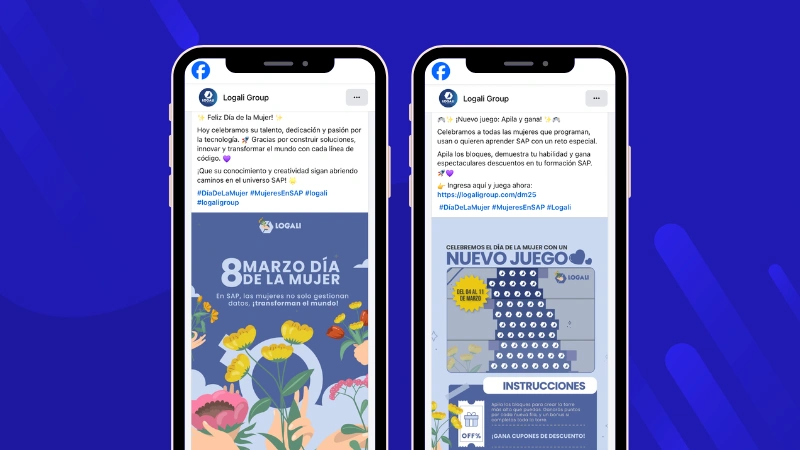
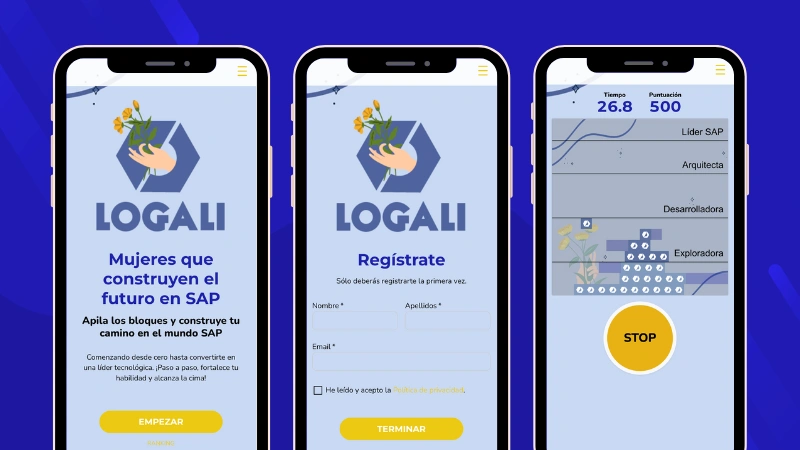
For example, Logali launched a Tower game campaign for International Women’s Day to promote its SAP training programs. The campaign was shared on social media to reach professionals interested in their courses.
In the game, users had to stack blocks with precision to build a tower, progressing through different levels that represented stages of SAP expertise. The experience combined branded visuals with a simple but challenging mechanic.
Participants could play multiple times, with an average of 7.5 attempts per user. Each participant received a discount coupon as a direct reward, reinforcing the campaign’s commercial objective.
This type of game works well when:
- you want to combine engagement with direct rewards
- you want to encourage repeated participation
- you aim to connect gameplay with a product or service
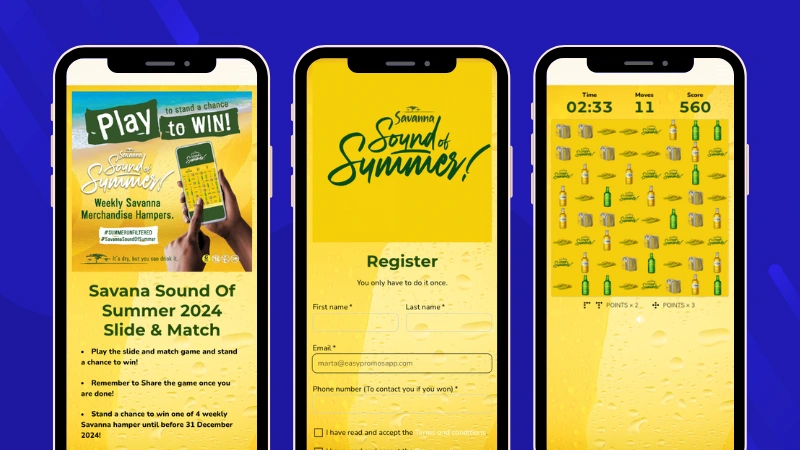
Another example is the Slide & Match game used by the cider brand Savanna Namibia to promote the Savanna Sound of Summer festival. The campaign was shared on social media in the weeks leading up to the event to build awareness and engagement.
In this match-3 game, users combined branded items to score points within a time limit. The visual elements, including product imagery and summer-themed assets, reinforced the brand throughout the experience.
Participants could play multiple times per week, encouraging repeat interaction during the campaign period. Each user received an entry into a final prize draw, where the winner received a branded merchandise hamper.
This type of game works well when:
- you want to integrate brand elements into the gameplay
- you want to promote an event or seasonal campaign
- you aim to increase repeated engagement over time
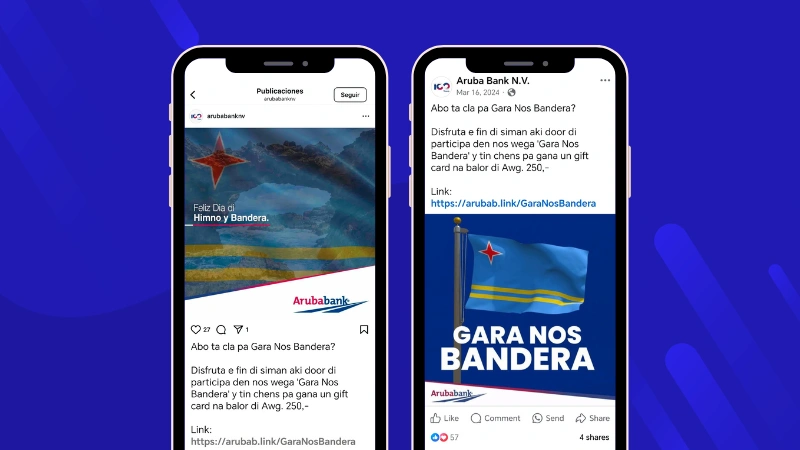
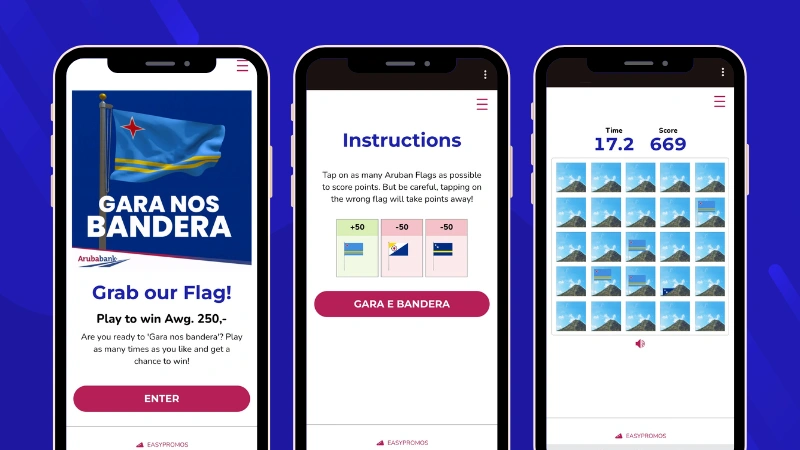
Aruba Bank used a Tap Tap game to celebrate the country’s national day, turning a cultural moment into an interactive campaign. The promotion was shared on social media to capture attention and drive participation.
In the game, users had to tap the national flag while avoiding other flags, combining speed and accuracy. The visual design featured recognizable national elements, reinforcing the campaign theme.
Participants could play multiple times during the campaign period for a chance to win a cash prize, encouraging repeated interaction.
This type of game works well when:
- you want to combine brand visibility with repeated play
- you want to connect with a local or cultural moment
- you aim to drive high participation through simple mechanics
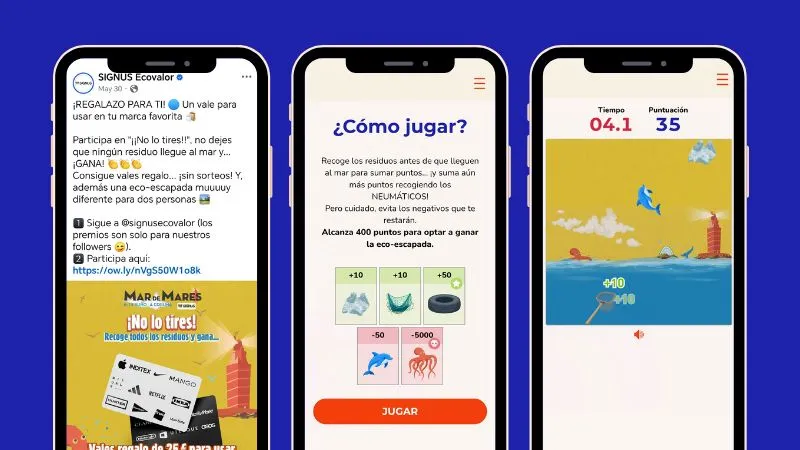
Signus Ecovalor, an environmental non-profit focused on tire recycling, used a Falling Objects game to raise awareness about ocean waste. The campaign was promoted on social media to attract participation and reinforce its environmental message.
In the game, users had to catch falling waste items while avoiding protected elements, combining reflex-based gameplay with an educational objective.
Participants who reached a minimum score qualified for a prize draw, while additional incentives included instant win vouchers during the campaign. This combination encouraged both immediate participation and continued engagement.
This type of game works well when:
- you want to mix instant rewards with a final prize draw
- you want to raise awareness around a specific topic
- you aim to combine education with interaction
Different game types serve different objectives, and with the Easypromos game recommender, you can quickly identify the best option for your campaign.
Word games
Word games are well suited for educational or thematic campaigns. Formats such as word search, crossword, or word shuffle allow brands to introduce concepts, reinforce messaging, or highlight specific vocabulary.
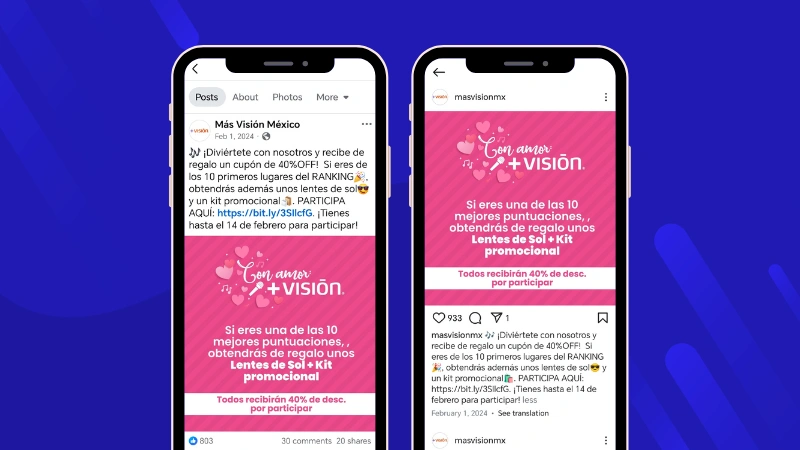
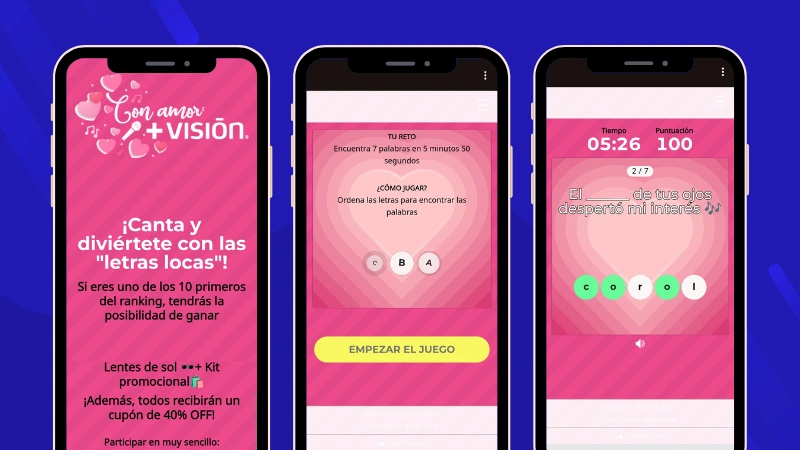
For example, Más Visión México launched a Word Shuffle game for Valentine’s Day, promoted through their social media profiles. Participants had to rearrange letters to complete song titles related to themes such as “eyes” and “looks,” aligning the game with the brand’s category.
The first participants in the ranking won prizes, while all users received a discount voucher, combining competition with guaranteed rewards.
This type of game works well when:
- you want to combine ranking-based prizes with participation incentives
- you want to reinforce brand messaging or themes
- you aim to create a simple, accessible challenge
Social Media Quizzes
Quizzes combine engagement with data collection, making them one of the most effective formats for capturing zero-party data. Users answer questions about their preferences, knowledge, or interests, and in return receive a result, score, or recommendation.
With Easypromos, you can create different quiz formats, such as knowledge quizzes, timed quizzes, or product recommenders. These formats allow you to collect structured data while offering a personalized experience to each participant.
This type of campaign works well when:
- you want to provide personalized results or recommendations
- you want to collect detailed user data
- you aim to segment your audience based on responses
How to set up and publish games on social media
With Easypromos, you can create and launch a social media game in a few structured steps:
- Choose a game format
Select from an extensive range of customizable game templates based on your campaign objective.
- Customize the game experience
Add your branding, visuals, messaging, gameplay settings, and prize details.
- Configure data capture and legal content
Set up the registration form, define the data fields you want to collect, and include consent checkboxes for terms and privacy policy.
- Publish and distribute the game
Share the campaign via link on social media, embed it on your website, promote it through ads, or use Instagram Messaging Automations to automatically send the game link via DM after user interactions.
- Analyze results and export data
Track participation, review responses, and export data to your CRM or marketing tools.
Social Media Games Ideas
To maximize participation, it’s important to combine engaging gameplay with clear incentives. Offering rewards such as discounts, direct prizes, or prize draws increases motivation and encourages users to complete the experience.
With Easypromos, you can configure different prize strategies depending on your campaign goals, including direct rewards for participation, ranking-based prizes, or random draws among all participants.
Social media games are not just a form of entertainment. They are a practical tool to engage users, collect zero-party data, and build a direct relationship with your audience. By combining interactive formats with structured data capture, you can turn social media activity into measurable marketing results.