With Easypromos, brands can create and manage writing contest campaigns through a digital engagement platform with participation forms, voting systems, moderation workflows, and winner selection tools.
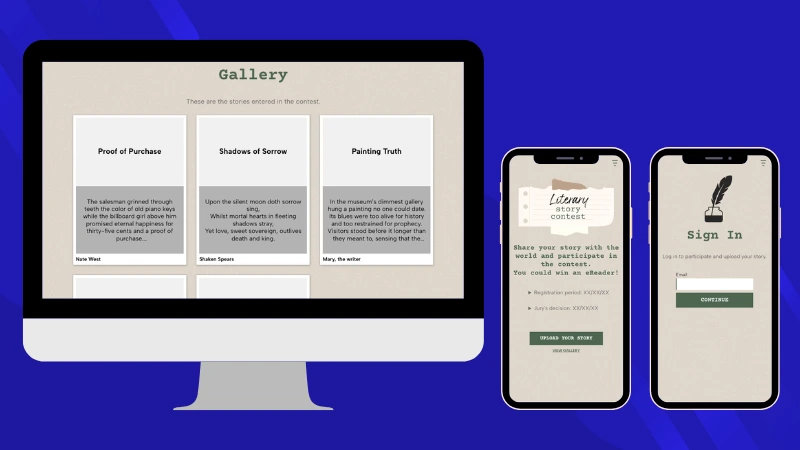
In the example below, you can see a writing contest demo created with Easypromos, including the welcome page, participation flow, and public gallery within the same campaign experience.
What Is a Writing Contest in Marketing?
A writing contest in marketing is an interactive campaign where participants submit written content related to a brand, product, experience, or campaign theme. Depending on the campaign, submissions may include testimonials, reviews, short stories, or branded storytelling content.
As part of a broader interactive marketing strategy, writing contests help transform audiences from passive viewers into active participants. Instead of simply consuming branded content, users contribute their own stories and experiences directly within the campaign.
Most online contests combine participation forms, moderation workflows, voting systems, social sharing, and winner selection mechanics within the same experience.
Want to read more on how contests can become part of your marketing strategy? Download our ebook The Role of Contests in a Marketing Strategy
Why Do Brands Use Writing Contests in Marketing Campaigns?
Brands use writing contests to encourage audiences to actively contribute stories, opinions, and experiences instead of passively consuming branded content. Depending on the campaign structure, writing contests can support goals such as collecting user-generated content, increasing visibility, and capturing first-party audience data.
Generate User-Generated Content (UGC)
One of the main reasons brands and organizations organize writing or creative contests is to collect user-generated content (UGC). Instead of relying only on branded messaging, campaigns invite participants to contribute original stories, testimonials, reviews, slogans, songs, videos, or other creative submissions connected to a campaign theme.
Because the content comes directly from participants, these campaigns often generate more authentic and emotionally engaging material than traditional advertising formats while also creating a large volume of reusable branded content.
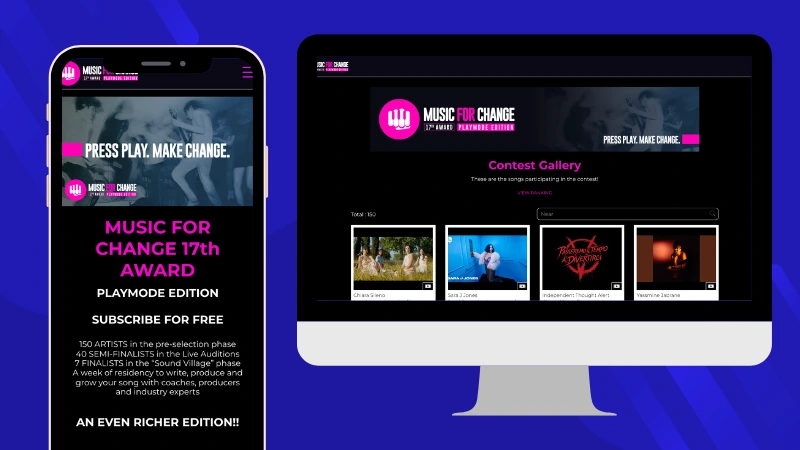
For example, the Music for Change contest invited emerging artists to submit original music projects as part of a large-scale community participation campaign. The contest received more than 150 video entries and generated over 14,000 votes through public participation and audience engagement mechanics.
Increase Engagement and Brand Awareness
Contests and participatory campaigns are highly effective for increasing visibility because they encourage audiences to actively contribute and share content instead of passively consuming it. Mechanics such as public voting, hashtag participation, and community sharing can significantly extend campaign reach while keeping audiences engaged throughout multiple campaign phases.
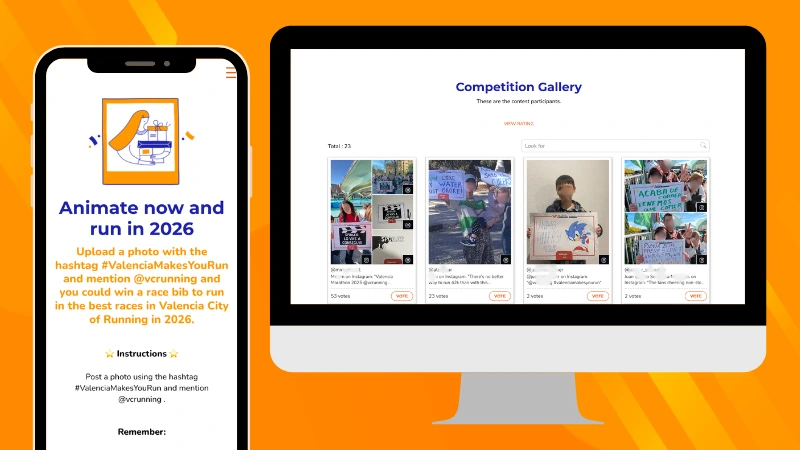
For example, Valencia Ciudad del Running organized an Instagram photo contest where participants shared images using the hashtag #ValenciaMakesYouRun and mentioned the brand profile to enter the campaign. The contest generated more than 700 participant submissions while increasing visibility through social sharing, public voting, and user-generated content.
Capture Leads and First-Party Audience Data
Writing contests and participatory campaigns can also help brands collect valuable first-party audience data directly from participants and voters. During the registration process, brands can gather contact information, newsletter subscriptions, customer preferences, and campaign-specific insights while encouraging audiences to actively interact with the brand.
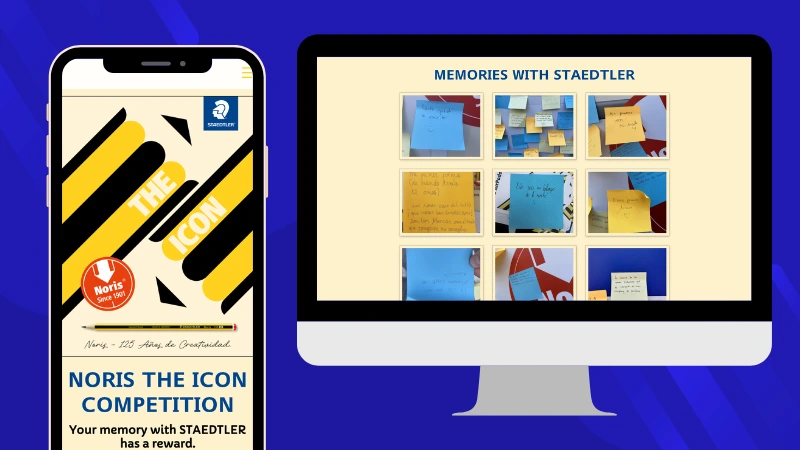
For example, STAEDTLER invited participants to share their first memory using a STAEDTLER pencil by uploading a photo of a handwritten post-it note through a branded campaign platform. The campaign generated more than 400 participant submissions while helping the brand collect direct contact data from end consumers, despite typically selling through retail and distribution channels.
When managed through a digital engagement platform, brands can centralize participant management, consent collection, moderation, voting systems, and analytics within the same campaign environment.
How Do You Organize a Writing Contest Online?
Running a successful writing competition requires more than collecting submissions. Brands need to define clear campaign goals, create a smooth participation experience, manage submissions efficiently, and promote the campaign across multiple channels to maximize participation and visibility.
- Define the Goal of the Campaign
Start by identifying what you want the campaign to achieve, whether that is collecting user-generated content, increasing engagement, generating visibility, growing an audience database, or supporting a product launch or community initiative. The campaign objective will influence the participation mechanics, promotional strategy, and type of content participants will submit.
- Choose the Writing Format and Participation Rules
Define what participants need to submit and establish clear participation rules from the beginning, including deadlines, eligibility requirements, evaluation criteria, and whether entries will be public or private. Depending on the campaign, submissions may include short stories, testimonials, reviews, or branded storytelling content. Clear rules reduce friction for participants and help simplify moderation later in the campaign.
- Create the Submission Experience
The participation process should be simple, intuitive, and optimized for mobile devices. Most online writing contests use an entry form where participants can submit text, upload files, and provide contact information and consent within the same participation flow. Reducing unnecessary steps can significantly improve completion rates.
- Moderate and Review Submissions
Before publishing entries or opening public voting, review submissions to ensure they comply with campaign rules and content guidelines. Moderation workflows help brands manage content quality, verify eligibility requirements, and efficiently handle campaigns with high participation volumes.
- Set Up Voting and Winner Selection
Many writing competitions use public voting, jury evaluation, or hybrid systems to increase participation and visibility. Public voting can help amplify campaign reach because participants often share their entries to gain support, while anti-fraud protections and transparent voting rules help maintain campaign credibility.transparent voting rules are essential to maintain campaign credibility. Brands should also define how winners will be selected, announced, and rewarded before launching the contest.
- Promote the Contest Across Multiple Channels
Promotion plays a major role in participation. Brands often combine email marketing, social media, online communities, paid advertising, physical locations, events, and QR code activations to drive traffic to the campaign.
Using a centralized campaign landing page helps brands maintain a consistent participation experience across all promotional channels while simplifying participation tracking and campaign management. - Communicate Results and Keep the Audience Engaged
The campaign should continue after submissions close. Announcing winners, showcasing selected entries, and sharing campaign results can help extend visibility and maintain audience engagement beyond the participation phase.
Writing contests often generate valuable content and community interaction that can continue creating visibility even after the campaign officially ends.
How Can You Increase Participation in a Writing Contest?
Increasing participation in a writing contest depends on reducing friction and giving audiences a reason to stay involved throughout the campaign. The most effective contests combine simple participation mechanics with community interaction and clear incentives.
Make Participation Simple
Simplifying the participation process is one of the most effective ways to increase participation in contests and participatory campaigns. Clear instructions, mobile-friendly formats, and simple registration flows help users complete the process without abandoning the campaign midway.
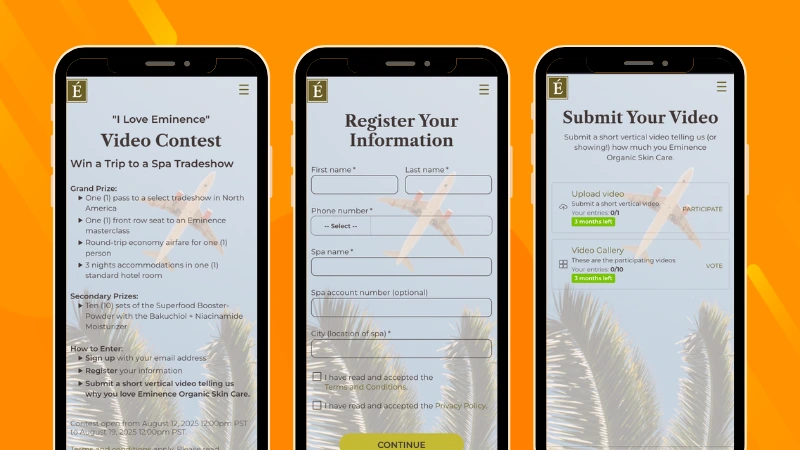
For example, Eminence Organic Skin Care organized a video contest where participants only needed to register their information and upload a short vertical video explaining why they loved the brand. The campaign used a streamlined participation flow optimized for quick mobile submissions and prize-driven participation.
Use Voting Mechanics to Extend Reach
Public voting can significantly increase campaign visibility because participants naturally share their entries to gain support from friends, followers, or online communities. This creates additional organic promotion while encouraging audiences to return to the campaign multiple times throughout the voting period.
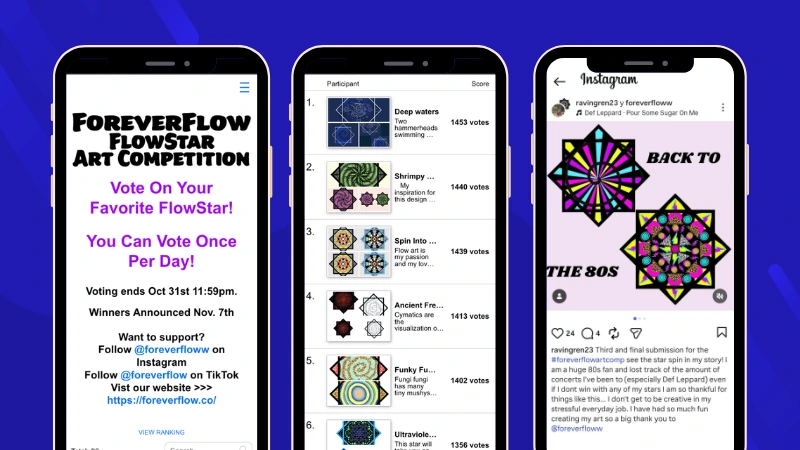
For example, ForeverFlow organized an online voting contest where participants competed to become the top-voted “FlowStar.” The campaign generated more than 13,000 participations between submissions and votes, combining community sharing, recurring voting mechanics, and social media promotion to sustain engagement throughout the contest.
Offer Rewards That Match the Audience
Prizes tend to perform better when they are directly connected to the audience’s interests instead of focusing only on high monetary value. Relevant rewards help attract more engaged participants while reinforcing the relationship between the campaign and the brand.
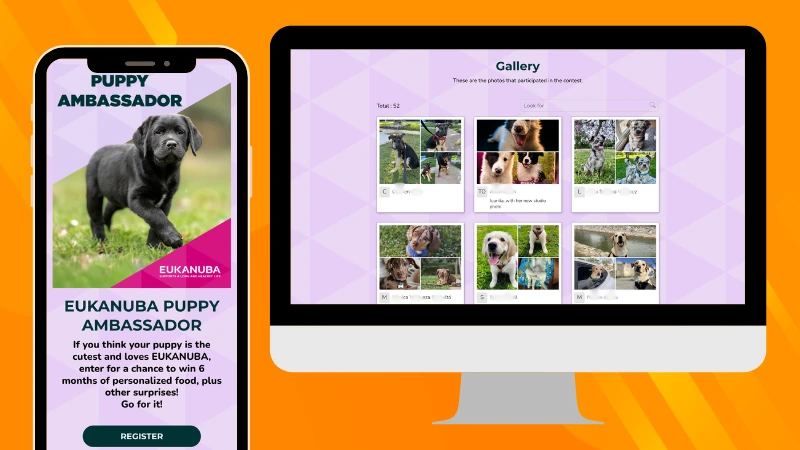
For example, Eukanuba organized a pet photo contest where participants could win six months of personalized dog food and additional brand-related prizes. The campaign aligned the reward with the interests of pet owners while encouraging participants to share and promote their submissions through the public gallery.
Showcase Participant Content and Maintain Visibility Throughout the Campaign
Displaying participant submissions publicly can encourage additional participation while strengthening community involvement around the campaign. Public galleries and voting pages give participants visibility, while built-in social sharing and mobile messaging options help participants distribute their entries and attract more votes from their communities. Maintaining visibility throughout the campaign with voting reminders, finalist announcements, and social media updates also helps sustain engagement over time.
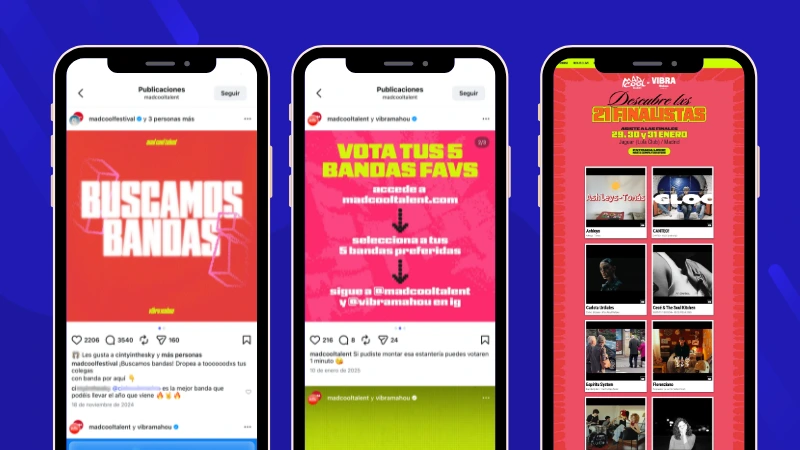
For example, Vibra Mahou and Mad Cool Festival organized a band contest where participants submitted music videos for a chance to perform at the festival in Madrid. The campaign combined a public video gallery, online voting, and continuous social media promotion, encouraging bands to mobilize their audiences and share their entries across digital channels.
Writing Contest Campaign Examples
Writing contests can support many different campaign goals, from community engagement and storytelling to audience participation and brand visibility. Here are some examples of writing contest campaigns created with Easypromos.
Storytelling Campaigns That Create Emotional Engagement
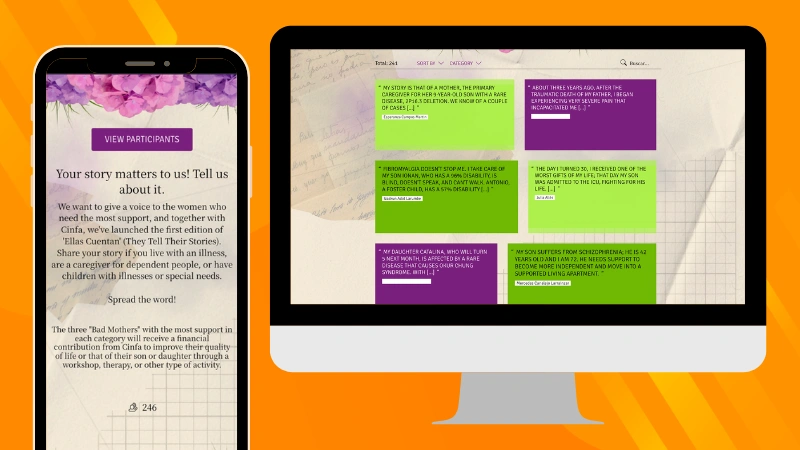
Malasmadres and Cinfa organized the “Ellas Cuentan” campaign to give visibility to women facing difficult life situations through storytelling and community participation. Participants shared personal experiences connected to real-life challenges, creating an emotionally driven campaign centered on visibility, engagement, and social impact.
Writing Contests With Public Voting and Community Participation
Public voting mechanics help extend campaign visibility by encouraging participants to actively share their submissions and mobilize their communities. Combining participant galleries with voting systems can also increase recurring visits and sustain engagement throughout multiple campaign phases.
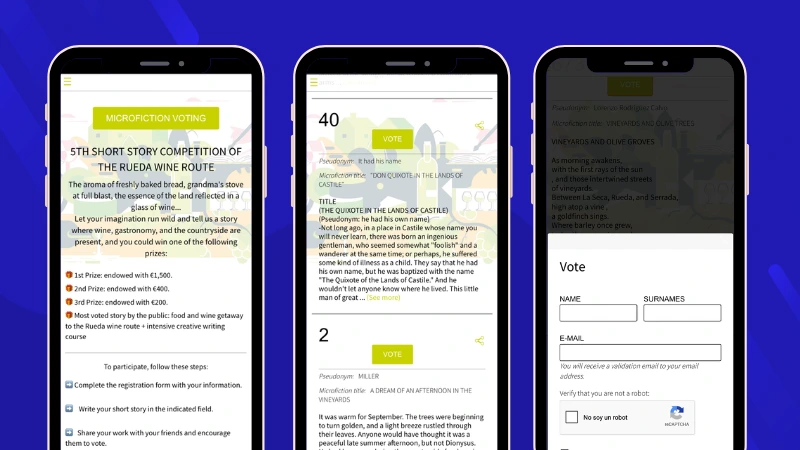
For example, La Ruta del Vino de Rueda organized a short-story contest focused on wine, gastronomy, and rural life. Participants submitted their stories through a dedicated microsite, while the public could read and vote for their favorite entries online. The campaign combined jury-selected prizes with a public voting category and generated nearly 3,000 votes.
Writing Contests for Brand Visibility and Audience Activation
Creative contests can help brands increase visibility while encouraging audiences to actively participate and share branded content with their communities. Public voting, participant galleries, and social sharing mechanics can amplify campaign reach while strengthening audience interaction around the brand.
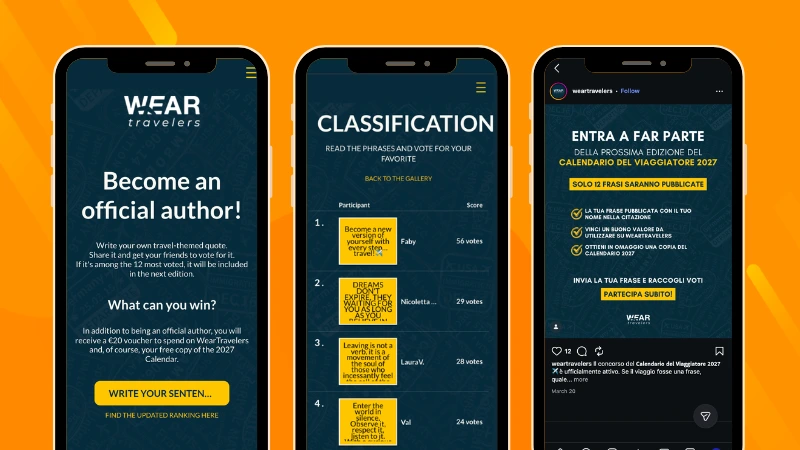
For example, Wear Travelers organized a travel-themed writing competition where participants submitted original travel quotes for a chance to become featured authors in the brand’s 2027 calendar edition. The campaign combined user-generated content, public voting, and community sharing to increase brand visibility and audience participation.
Campaigns for Professional Communities and Local Business Participation
Participatory contests can also help organizations strengthen relationships with professional communities, local businesses, distributors, franchise networks, and partner ecosystems. Public voting mechanics encourage community involvement while giving participants visibility within a shared initiative, making these campaigns especially useful for B2B environments where engagement and visibility among partners or members are important objectives.
Conclusion
Writing contests help brands turn audiences into active participants through storytelling, voting, and community engagement. Whether the goal is collecting user-generated content, increasing visibility, or growing an audience, these campaigns combine creativity with interactive participation mechanics that can scale across digital channels.
With Easypromos, brands can create and manage writing contest campaigns through a digital engagement platform that centralizes participation, voting, moderation, and campaign management in a single experience.