In this context, Easypromos is a digital engagement platform that enables brands to launch interactive promotions, mini-games, and AI-powered campaigns without any development work. The multi-path quiz is one of the most effective formats within this ecosystem, especially when combined with alternative routes, personalization, and meaningful final rewards.
In this article, we provide practical recommendations for designing an effective multi-path quiz, along with examples you can apply directly to your brand.
Why Branching-Logic Quizzes Work So Well
At Easypromos, we refer to this format as a Multi-path Quiz, also known in the industry as a branching-logic quiz or a quiz with logic jumps. This type of dynamic works exceptionally well because it turns the user into the active hero of the experience, allowing them to choose, explore, and progress based on their decisions. The format captures attention instantly, boosts interaction time, and builds an emotional connection with the brand because the experience is lived, rather than just consumed. It also makes it easy to integrate branding and reward users naturally, whether during the experience or in the final messages.
In short, this kind of dynamic helps you achieve:
- High engagement. The user plays, chooses, and progresses, resulting in more interaction time and a memorable brand experience.
- Visibility without saturation. It’s an original, underused format that stands out, surprises, and is shared organically.
- Frictionless data. The quiz guides the user, making data collection a seamless experience.
- Emotional connection. The narrative generates empathy, humor, and positive recall, making the brand feel close, creative, and different.
- Repeatability and virality. Alternative routes and different endings encourage users to replay the quiz and share their results.
- Marketing stack integration. It’s an ideal dynamic for engaging with users, gathering contact details, and syncing them to your CRM to begin a direct brand–user relationship.
- Higher participation. Gamification elements, incentives, and rewards provide genuine motivation to continue, complete, and recommend the experience.
The multi-path quiz fosters participation, as many other many other interactive dynamics do, mainly because it doesn’t really look like marketing.
A Step By Step Guide to Build A Branching Logic Quiz
With Easypromos, you can create a logic-based questionnaire using the Multi-path Quiz, an ideal format for presenting questions and answers based on each user’s choices. The quiz branches out and displays new questions tailored to every scenario, all previously defined by the organizer. This results in a dynamic, interactive experience with fully personalized outcomes.
To ensure that all questions, endings, and branching paths are coherent and meaningful, we recommend following the following guidelines.
- Start by defining how many messages, alternatives, or products you with to display in the final messages.
This is essential for building a solid structure and preventing your decision tree from becoming chaotic. It ensures that every question leads the user toward a meaningful, balanced final result aligned with your goals. For example, if your adaptative quiz aims to recommend products, you must first determine how many products will appear in the final results. This decision determines the number of paths the user can follow within your multi-path structure.
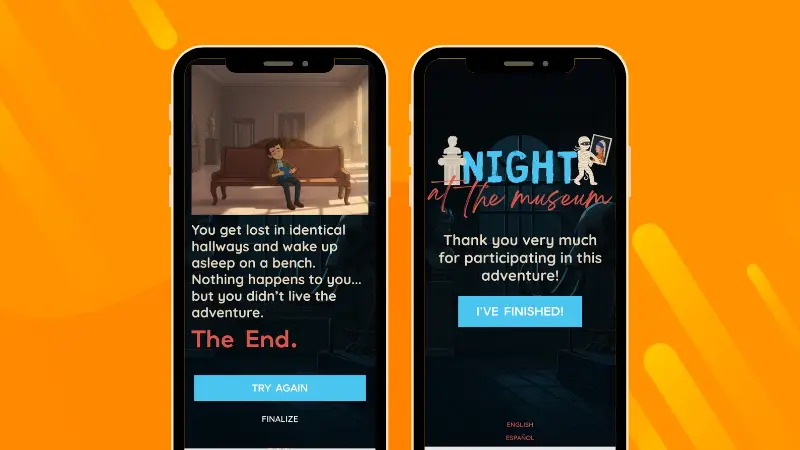
In “choose-your-own-adventure” quizzes, where users pursue a mission, such as finding a lost object, it’s useful to have success and failure endings. Depending on their decisions, users may reach a “You didn’t succeed, try again” ending or a winning one, such as “Congratulations! You found the treasure!” You can also offer a discount or allow entry into a prize draw.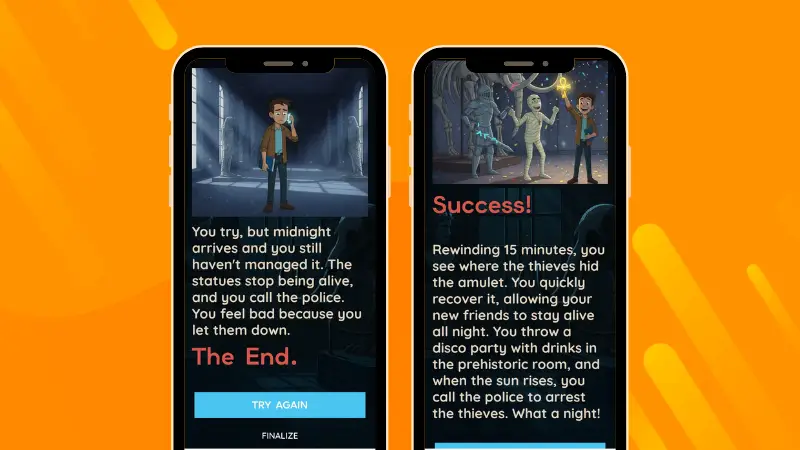
- Decide the number of questions, possible answers, and which final message each one links to.
This step helps you visualize the size of your branching tree. A structure of 5 questions with 2 answer options is far simpler than 5 questions with 4 options each. In the second case, the tree grows exponentially, as each answer leads to a new path.
To control complexity, you can make only one of the answers the “correct” one, even if you show multiple options. This keeps your quiz funnel manageable and prevents the experience from becoming an overwhelming forest of branches.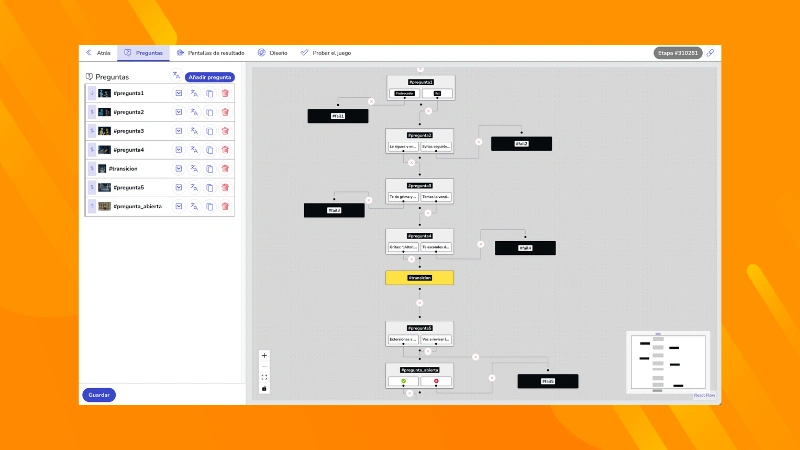
- Decide the types of answers you’ll use to build the storyline.
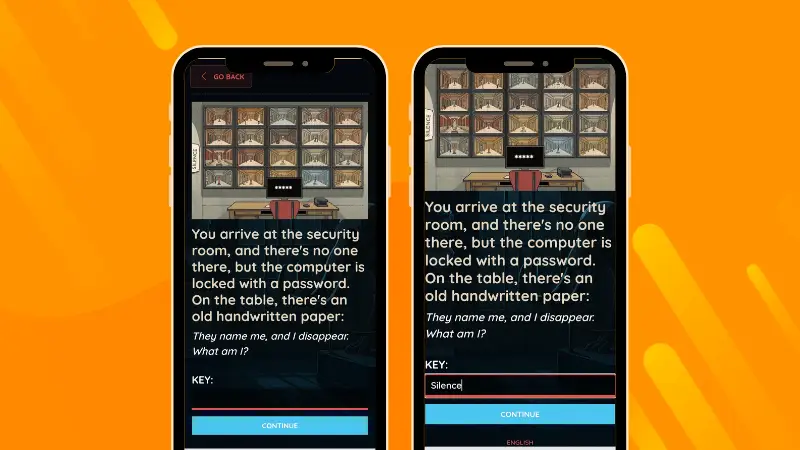
It’s important to define the type of questions from the start. There are two main options: closed-ended questions with button-based answers, and open-ended questions where users must type their response. Button-based questions are the easiest and fastest for participants, as they simply select an option and move on to the next screen. Open-ended questions, however, must be written with clarity and precision, since the user needs to enter a code, word, or solution derived from a clue, riddle, or direct question. In these cases, the answer can be validated automatically, allowing the user to proceed or trigger a final message. Detail is essential: if the user makes a mistake, they could “lose the game.” This is why open-ended questions must be especially clear, to avoid frustration and ensure the experience remains fun, intuitive, and smooth.
- Decide how many attempts or participations the user will have.
It’s important to define from the start how many attempts and opportunities each participant will have, as this directly shapes the experience of a multi-path quiz. These limits determine the chances users get to try to solve challenges, make decisions, or reach an outcome before the experience ends. Clear boundaries help maintain a sense of challenge without causing frustration, support a well-structured storyline and closing messages, and prevent the quiz from turning into an endless loop that weakens its impact or marketing value. In short, it sets the rules of the game and ensures the user journey remains engaging and purposeful.
- Decide how many attempts or participations the user will have.
It’s important to define from the start how many attempts and opportunities each participant will have, as this directly shapes the experience of a multi-path quiz. These limits determine the chances users get to try to solve challenges, make decisions, or reach an outcome before the experience ends. Clear boundaries help maintain a sense of challenge without causing frustration, support a well-structured storyline and closing messages, and prevent the quiz from turning into an endless loop that weakens its impact or marketing value. In short, it sets the rules of the game and ensures the user journey remains engaging and purposeful.
- Define the prizes: how many and how to deliver them.
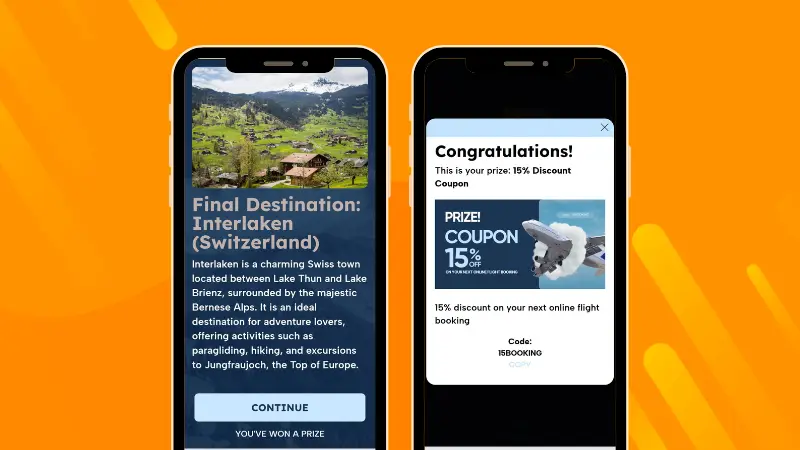
It’s also essential to define the prizes, as they give purpose and motivation to the multi-path quiz. Decide what will be offered, how many rewards there will be, and how they will be delivered—whether through codes, discounts, access to exclusive content, or any other type of incentive. This not only sets clear expectations for participants but also helps shape the quiz’s final messages and user paths, ensuring that every outcome leads to a reward that feels clear, fair, and appealing.
- Decide whether you want to collect user data.
There are to ways to collect user data with a Multi-path Quiz
1. Registration form. It can come up before or after the quiz, depending on your marketing goals (e.g. limited attempts, collect insights from your audience, collect user data from winners only). If collecting user data is not necessary, the registration step can be disabled, making the quiz anonymous.
2. Indirect data, collected through user choices during the experience, provides insight into participants’ profiles or preferences without a registration form.
Types of Screens And Messages Available in A Branching Logic Quiz
When setting up a multi-path quiz, it’s important to understand the different types of screens and messages available, as each one plays a specific role in shaping the user experience and structuring the narrative.
- Single-choice questions. Fast and intuitive, the choice determines the next branch. The ideal option to lead users to several endings or recommendations.
- Open-ended or external input questions. Users must type a word, code, or answer to proceed. They’re ideal for riddles or open-ended challenges but require clear wording to avoid frustration, since an incorrect response can prevent the user from moving forward.
- Transition screens. Pages where the user doesn’t need to make a choice. They’re used to provide context, advance the story, or set up the next question, maintaining the quiz’s pace and reinforcing the narrative without adding complexity.
- Feedback messages. These appear dynamically on the screen to inform users about their choices, enhance engagement, or guide them toward the next action. For example, they can confirm that an answer is correct or provide an additional hint.
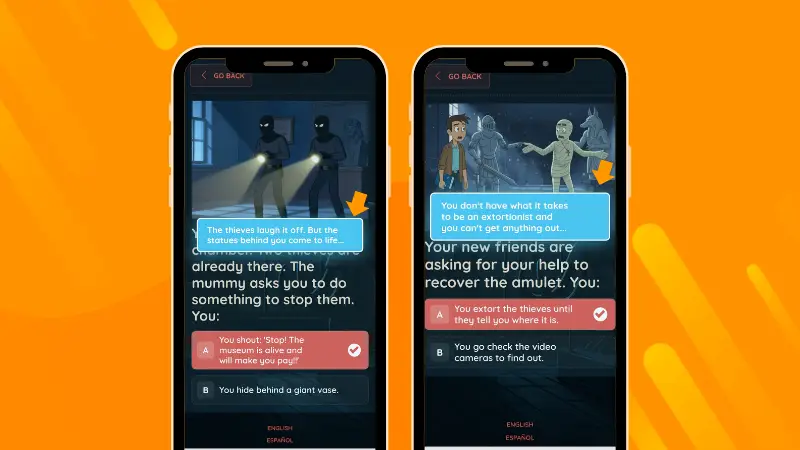
- Final success or failure screens. They signal the end of the quiz. Use them to award prizes, points, discounts, or trigger an email. Success endings celebrate that the user has achieved the objective, while failure endings allow you to provide feedback or offer second chances to keep the experience fun, engaging, and motivating.
How to Increase Participation in a Quiz With Logic Branching
Boosting participation relies on three pillars: user protagonism, an adventure-style narrative, and a meaningful reward system. This combination turns any quiz built with branching logic into a memorable marketing experience.
When users choose their path and feel in control, motivation and engagement rise dramatically. This effect is strongest in adventure-style quizzes, where each decision impacts the storyline and final outcome, a perfect use case for adaptative quiz mechanics.
Rewards also elevate the experience. Easypromos allows you to distribute prizes natively within this format, something many other conditional logic quiz maker tools don’t offer. You can deliver coupons or customized rewards based on user decisions, an excellent example of adaptative quiz software in action.
For example, imagine a quiz about travel destinations: based on their answers, the user could receive a discount coupon for a specific trip, turning the experience into something fun, interactive, and genuinely personalized. These types of incentives not only boost participation but also strengthen the user’s connection with the brand.

Theme Ideas for Creating a Logical Quiz
“Choose-your-own-adventure” style experiences
- Treasure hunts where decisions bring users closer to or further from the objective.
- Mystery or escape-style challenges where users must make the right choices to reach the final outcome.

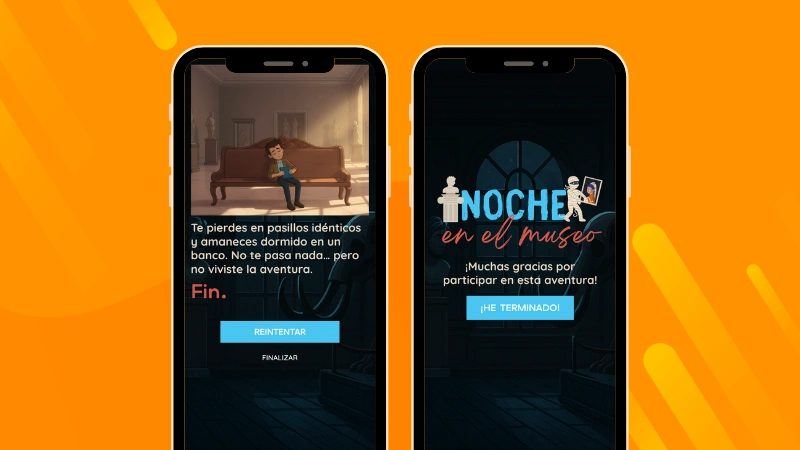
Try our demo “A Night in The Museum” to experience the multi-path quiz.
Product Or Service Recommender
- Find your ideal travel destination. Suggest travel destinations or experiences depending on the user’s answers and distribute discount coupons for the trip or experience at the end of the quiz.
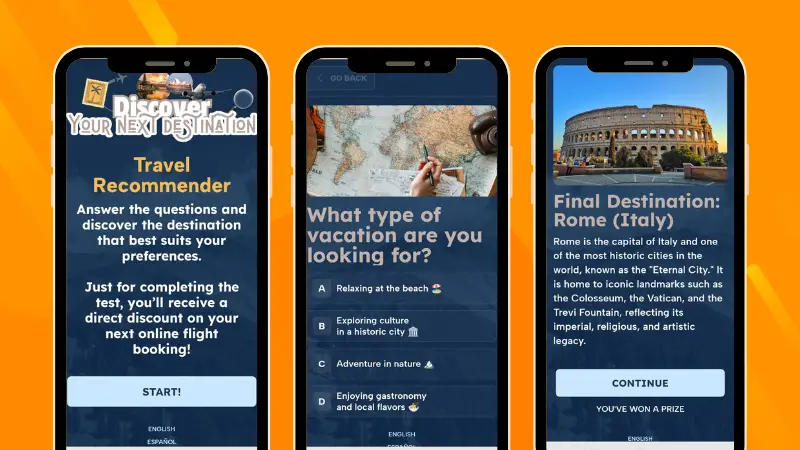
Try our travel recommender demo to get a feel of the customer experience.
- Product recommenders integrated into your website. Use product or service features to guide users toward the option that best fits their needs. Once they discover their ideal product or service, you can provide additional information, offer a discount, or enter them into a prize draw.
- Launch and promotion of specific products. For example, a bookstore may want to highlight an adventure novel or a particular product through an interactive journey. This approach showcases the theme while capturing the attention of the target audience.
Level-Assessment Quiz to Identify User Types
- A quiz designed to determine a user’s level or proficiency—ideal for language academies, IT training platforms, or sports programs. Through a structured set of questions, you can evaluate each participant’s knowledge or skill level.
- Data-Capture Assessment. This format allows user data collection while simultaneously categorizing participants based on their preferences or areas of expertise. With this information, you can deliver tailored content and increase the relevance of your communications.
User-Segmentation Quiz to Personalize the Experience
- A perfect fit for websites offering multiple services. The quiz helps determine which area or service each user is most interested in. For example, a branching-logic questionnaire can detect whether a user already knows what type of car they want or if they’re still gathering information. Based on their answers, you can present specialized questions and customized outcomes, improving the user experience and boosting conversion potential.
Now you know how to create a multi-path quiz using branching logic, logic jumps, and skip logic! If you have questions or need assistance, we’re here to help.
 Request a demo