Brands use Puzzle games to increase engagement, promote products, drive traffic, generate leads, and encourage repeat participation. With Easypromos, brands can create branded Puzzle campaigns that combine gameplay, registration forms, leaderboards, rewards, and data collection within a single experience.
In this article, we share real branded Puzzle game examples and explain how each one can inspire your next campaign.
What Is a Branded Puzzle Game?
A branded Puzzle game is an interactive campaign where participants reconstruct an image by moving puzzle pieces into the correct position. The image can feature a product, campaign creative, event visual, sponsor message, destination, or any other branded content.
Because participants spend time focusing on the image while completing the challenge, Puzzle games are often used to increase exposure to key campaign visuals while creating an engaging participation experience.
They can be combined with registration forms, prize drawings, leaderboards, coupons, or repeat-play mechanics depending on the campaign objective.
Want to see how an Easypromos Puzzle campaign works in practice? Try our Travel and Tourism Puzzle demo and experience the participation flow from a participant’s perspective.
Real Branded Puzzle Campaigns Created with Easypromos
Product Promotion Puzzle Example: Gorenje
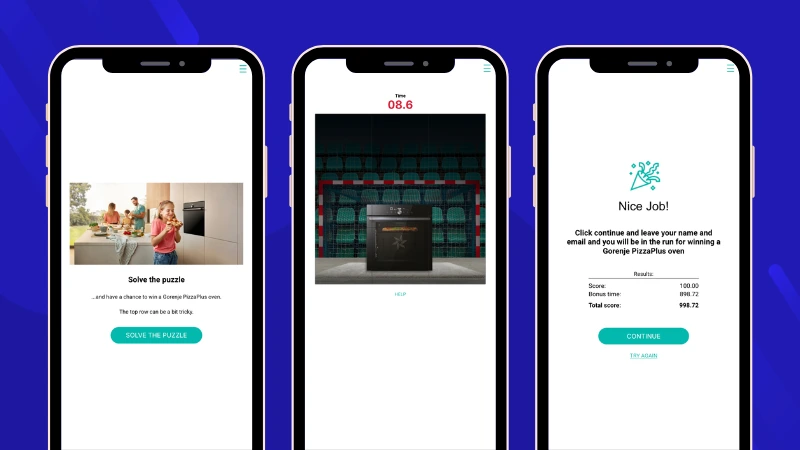
Kitchen appliance brand Gorenje used a branded Puzzle game to promote its PizzaPlus oven. Participants completed a puzzle featuring the product image and registered for a chance to win the oven through a prize drawing.
The campaign generated more than 14,000 participations over 40 days, demonstrating how a simple Puzzle game can attract large audiences when combined with a relevant prize and a clear call to action.
This approach works particularly well for product launches, product awareness campaigns, and lead generation initiatives where the objective is to maximize exposure to a specific product visual.
Product Launch Puzzle Example: Lost Mary
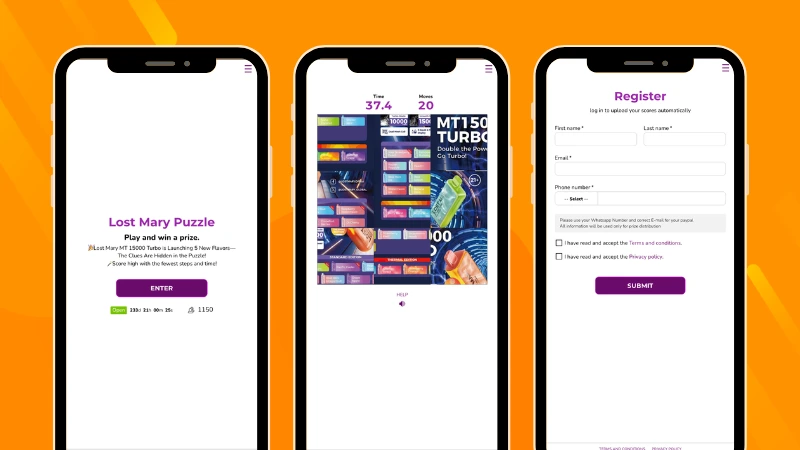
Vape brand Lost Mary launched five new flavors of its MT 15000 Turbo product through a Puzzle challenge where participants had to complete the image and achieve the best score possible. The campaign rewarded the top-performing participants and encouraged competition through time and move-based rankings.
More than 1,800 participants joined the campaign in only 48 hours. By making the product image part of the challenge, the brand transformed a product launch into an interactive experience. Campaigns like this demonstrate how the Easypromos cloud infrastructure can support sudden spikes in participation while maintaining a smooth and reliable gameplay experience.
This type of Puzzle campaign works well for product launches, new collections, packaging reveals, and limited-edition releases.
Ecommerce Traffic Puzzle Example: Papiroga
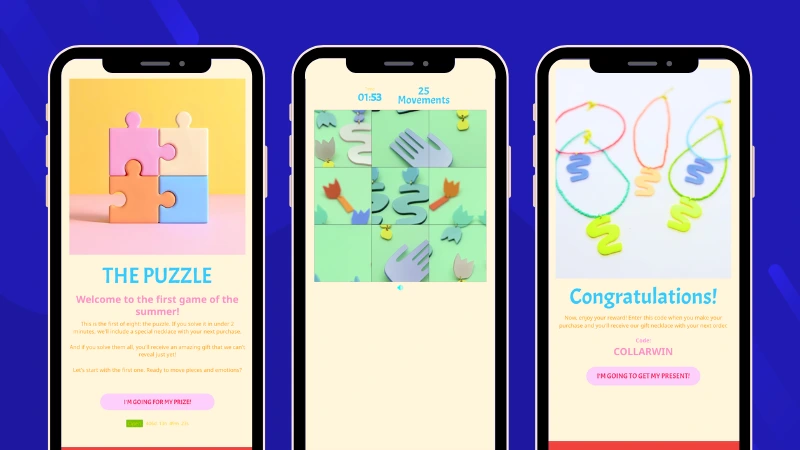
Jewelry brand Papiroga promoted its summer campaign through Instagram and invited followers to solve a Puzzle challenge in less than two minutes. Participants who completed the challenge could receive a special reward redeemable in the brand’s online store.
The campaign attracted more than 1,200 participants and generated over 2,400 plays in just seven days. Traffic originated almost entirely from Instagram and private messages, showing how Puzzle games can connect social media engagement with ecommerce objectives.
This approach is particularly useful for driving store visits, distributing rewards, and encouraging repeat participation across multiple campaign phases.
Event Reveal Puzzle Example: Michelin Guide Portugal
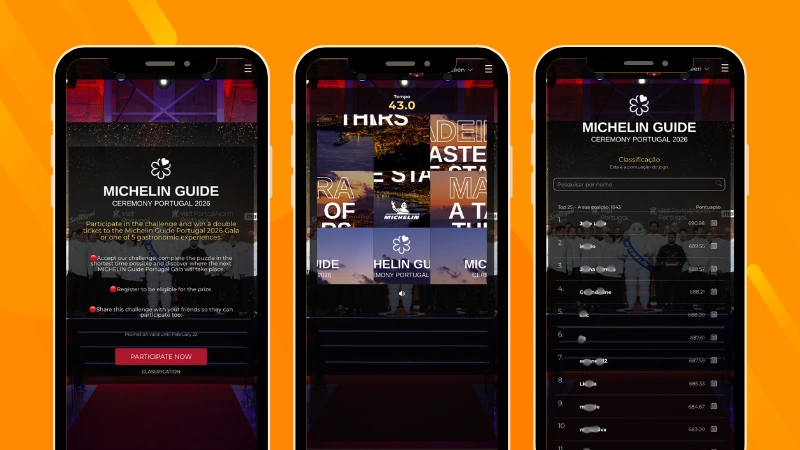
To build anticipation for the Michelin Guide Portugal Gala, Michelin launched a Puzzle challenge inviting participants to discover the location of the next ceremony. Players completed the Puzzle, registered for prizes, and competed on a public leaderboard based on their performance.
The campaign attracted more than 2,300 registered participants and generated over 25,000 plays in just 13 days. Daily participation and ranking mechanics encouraged players to return repeatedly and improve their scores.
This type of Puzzle campaign works especially well for event announcements, destination marketing, venue reveals, and campaigns designed to generate anticipation before a major launch or event.
Employee Engagement Puzzle Example: Space Coast Credit Union
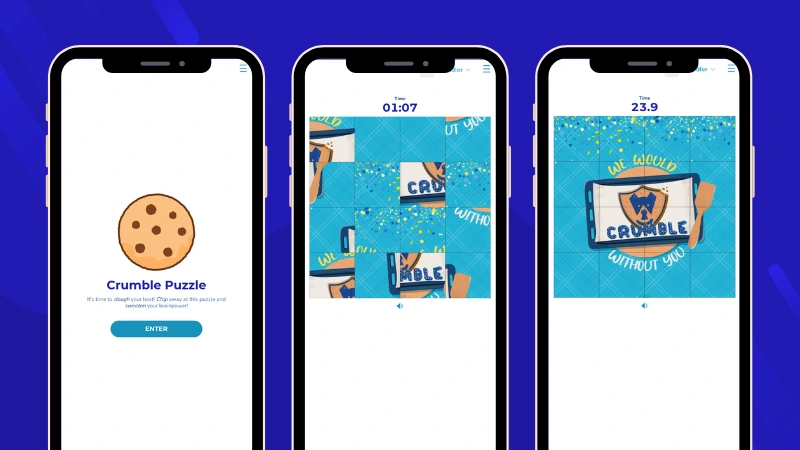
Space Coast Credit Union used a branded Puzzle game as part of an employee appreciation initiative. Staff members completed a Puzzle featuring a cookie tray and the message “We would crumble without you” for a chance to win gift cards.
More than 500 employees participated in less than 48 hours. The campaign demonstrated how a simple Puzzle challenge can support internal communications while reinforcing company culture through a playful branded experience.
This approach is particularly effective for employee engagement, internal communications, recognition programs, and corporate culture initiatives.
How to Run a Branded Puzzle Game Campaign
The following steps reflect how brands typically create Puzzle campaigns with Easypromos, from selecting the image to rewarding participants and analyzing results.
- Choose the Campaign Image
Select an image that supports your campaign objective, such as a product photo, event visual, seasonal creative, or campaign announcement. The most effective Puzzle images usually have a clear focal point, strong visual contrast, a recognizable subject, and a direct connection to the campaign message. If the completed image reveals something participants are curious to discover, they are more likely to finish the challenge.
- Define the Participation Incentive
Decide what participants receive for completing the Puzzle, whether it’s entry into a prize drawing, a coupon, a guaranteed reward, leaderboard recognition, or access to exclusive content. Depending on the campaign, you can reward every participant who completes the challenge, award prizes to the top-ranked players, or randomly select winners from all eligible participants.
- Add Registration if You Need Leads
If lead generation is a campaign goal, include a registration form before or after the game to collect participant information.
- Promote the Campaign Across Your Channels
Promote the Puzzle through social media, email marketing, websites, messaging apps, QR codes, or paid advertising to drive participation. Puzzle campaigns created with Easypromos are published as responsive microsites with their own URL, making it easy to share the experience across multiple channels and devices while maintaining a consistent participation flow.
- Reward Participants and Analyze Results
Distribute prizes, rewards, or coupons, and review participation data to measure campaign performance.
Branded Puzzle FAQs
What branded Puzzle game ideas work best for marketing campaigns?
Some of the most effective Puzzle campaigns focus on product launches, ecommerce promotions, event announcements, seasonal campaigns, employee engagement initiatives, and lead generation. The best approach depends on the campaign objective and the audience you want to reach.
How can a brand use an online Puzzle game to promote a product?
A brand can use a product image, packaging design, or collection visual as the Puzzle itself. As participants complete the challenge, they spend time interacting with the product while discovering key campaign messages.
How can a branded Puzzle game collect leads?
Puzzle games can include a registration form before or after participation. Brands often collect contact information in exchange for entry into a prize drawing, access to rewards, or participation in a leaderboard competition.
How can a branded Puzzle game drive traffic?
Many brands promote Puzzle campaigns through social media, email marketing, paid advertising, QR codes, and messaging apps. Rewards such as coupons, discounts, or exclusive offers can help direct participants from the Puzzle game to an ecommerce store or landing page.
When is a Puzzle game a good fit for a campaign?
Puzzle games are a good fit when the campaign includes a strong visual element that participants can discover or reveal. They work particularly well for product launches, seasonal promotions, event marketing, sponsor activations, destination campaigns, and community engagement initiatives.
What type of image should a brand use in a Puzzle game?
A brand should use an image that supports the campaign goal. Product photos work well for launches and promotions, destination or event images can build anticipation, and branded creatives can reinforce seasonal, internal, or community messages. The image should be clear, recognizable, and rewarding to reveal.
Conclusion
Branded Puzzle games can support many different campaign objectives, from product launches and ecommerce promotions to event marketing, employee engagement, and lead generation. The examples in this article show how a simple image-based game can be adapted to different audiences, channels, and business goals.
With Easypromos, brands can create and manage branded Puzzle campaigns with registration forms, leaderboards, rewards, and customizable participation flows from a single platform.
Have a specific campaign in mind? Contact us via live chat or request a video call to discuss your goals. We’ll be happy to review your use case and help you adapt a Puzzle game to your audience, channels, and objectives.