Online voting contests help increase visibility for candidates, engage communities, and encourage participation around an event, awards program, brand, or organization. They can be used to select winners, choose finalists, determine a People’s Choice Award, or involve an audience in an important decision.
The challenge is balancing participation and security. An open voting contest can generate significant visibility, but it also requires voter registration, vote limits, fraud prevention measures, configurable rankings, and clear terms and conditions.
With Easypromos, you can create an Online Voting Contest as a standalone microsite or embed it directly into your website. The platform supports candidates, categories, voting stages, voter registration, unique sharing links, and advanced fraud control tools to help ensure a fair and transparent voting process.
In this article, we explain the key elements of a successful online voting contest and share real examples of voting campaigns used for awards, public competitions, events, and community initiatives.
7 Keys to Organizing a Successful Online Voting Contest
Whether you’re planning an awards program, a People’s Choice vote, a community contest, or a public voting campaign, the following recommendations will help you create a more secure, transparent, and engaging experience for both candidates and voters.
Key 1: Provide Each Candidate With a Unique Link to Share and Gather Votes
A unique link for each candidate helps promote their entry and maximize the visibility of the voting contest. Each candidate should have easy access to their own link and be able to share it across social media, messaging apps, email, and other communication channels. Supporters should also be able to share the link easily to help attract additional votes.
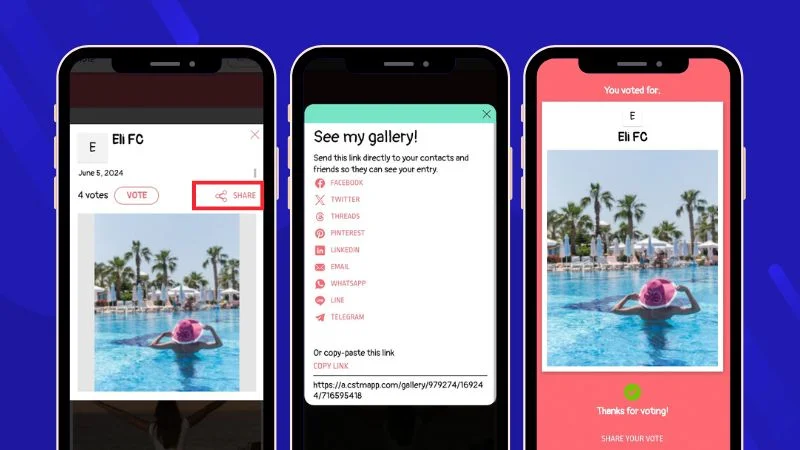
It’s crucial that shared content be engaging. Most social networks, such as Facebook, Instagram, and X (formerly Twitter), as well as messaging apps like WhatsApp and Telegram, display a preview of the link. This preview should include key information about the candidate, such as a photo, video, or short description, encouraging supporters to click through and cast their vote.
Organizers should also have tools to distribute unique links automatically and trigger follow-up actions. For example, after voting, participants can be encouraged to share the candidate they supported, helping generate the viral reach that makes voting contests so effective.
Explore our photo contest voting demo to see how candidates can share their entries and gather votes.
Key 2: Require Voters to Register Before Voting
While anonymous voting may seem appealing, it is not a realistic option for serious online voting contests. One of the biggest challenges in any voting campaign is preventing fraud, and the first line of defense is to identify voters through a registration process.
Registration can be as simple as requesting a name, email address, and acceptance of the privacy policy. Depending on your needs, you can also request additional information such as a phone number, age, or location. Social login options like Google or Facebook can help simplify the registration process.
It can also be useful to reward participation. For example, many organizers run a prize drawing among everyone who registers and votes.
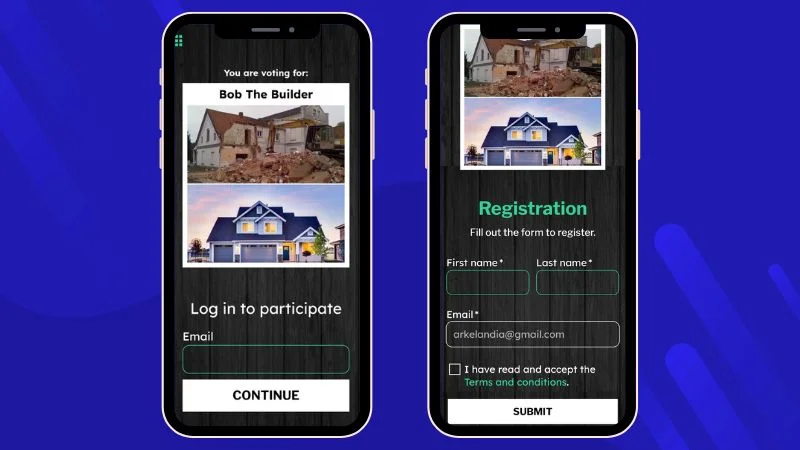
Having the voter’s email address and consent makes it possible to send automated follow-up emails. These messages can thank participants for voting, remind them of the candidate they supported, and encourage them to share the candidate’s unique link with others, helping generate the visibility that makes voting contests successful.
Key 3: Fraud Control Is a Must in an Online Voting Contest
Fraud control is one of the most important aspects of any online voting contest. When prizes, recognition, or awards are involved, some participants may attempt to manipulate the results through practices that would be difficult or impossible in an offline environment. Vote-buying websites, vote-exchange forums, fake email accounts, and bots are just some of the challenges organizers may face.
Fortunately, there are effective ways to combat these practices. This is one of the main reasons why voter registration is so important. It allows organizers to apply anti-fraud measures such as email verification, blocking temporary email addresses, detecting suspicious IP activity, limiting voting frequency per device, and identifying patterns associated with vote buying or vote exchanges.
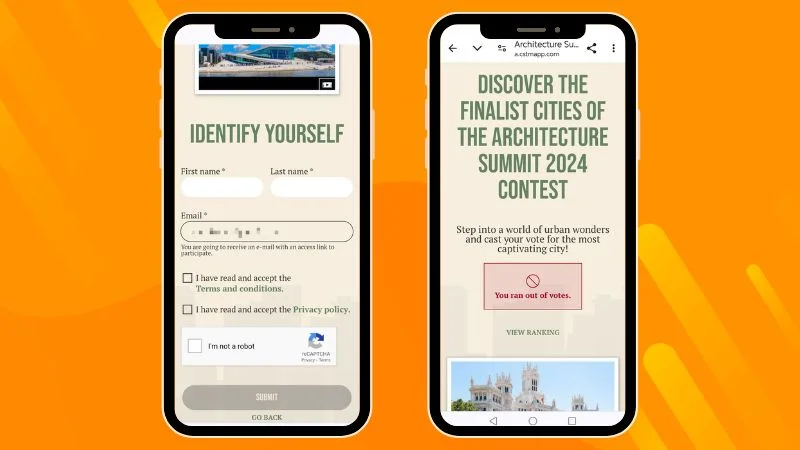
A voting platform should also include monitoring tools and alerts to help organizers detect suspicious activity during the voting period and take action when necessary. In addition, it is advisable to include a clause in the contest rules that allows organizers to remove fraudulent votes or disqualify candidates if required.
Key 4: Hide Vote Counters and Rankings in Your Online Voting Contest
An effective way to reduce voting fraud is to hide vote counters and rankings. If candidates cannot compare their results with others, they won’t know how many votes they need to gain an advantage, reducing the temptation to engage in fraudulent practices.
A common approach is to keep vote counters visible during most of the voting period and hide them during the final days of the campaign. This allows participants to follow the contest while helping organizers protect the integrity of the final results.
Another option is to use public voting to select finalists rather than determine the overall winner. For example, the audience can vote to choose the top three candidates, while a jury makes the final decision.

The Advanced Votes feature goes beyond a traditional single-vote system. Instead of selecting just one candidate, participants can vote for multiple entries and assign different scores to each one. This approach works well for rankings, favorite-voting campaigns, and award contests where voters are asked to rank their preferences rather than choose a single winner.
Key 5: Enabling Daily Voting Frequency Securely Is Key
Allowing users to vote once per day is an effective way to increase participation and visibility. Daily voting encourages supporters to return regularly, generating more visits, more shared links, and more exposure for both the candidates and the contest itself.
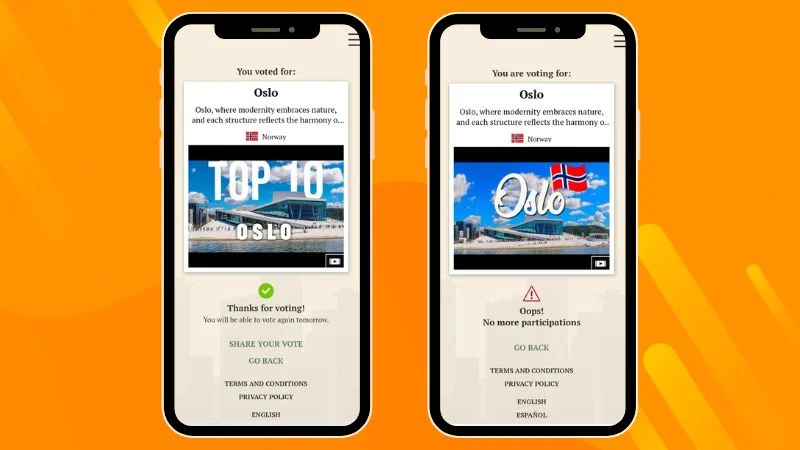
To maintain the reliability of the results, daily voting should be combined with voter identification and fraud control measures that prevent abuse while still encouraging recurring participation.
Key 6: Categories and Stages System
Many online voting contests include multiple categories or voting stages. This approach helps extend the campaign over time, increase visibility, and recognize multiple winners.
Each category should be managed independently, with its own voting period, voting system, and ranking. The platform should also make it easy to manage different stages of the contest, such as qualification rounds, semifinals, and finals, while preserving and displaying historical results when needed.

A good example is a television competition where viewers vote for the most beautiful town in a region. The contest is divided into provinces, and users vote weekly for towns within their area. The winning town from each province advances to the next stage until a final winner is selected.

Key 7: A Voting Contest Should Showcase the Strengths of Every Candidate
Voters need enough information to evaluate the candidates before casting their vote. For this reason, a voting contest should allow organizers to create complete candidate profiles rather than limiting entries to a name or image.
Depending on the type of contest, candidate profiles may include photos, videos, documents, descriptions, social media links, or other supporting content. The goal is to provide voters with the context they need to compare candidates and make an informed decision.
The easier it is for voters to explore and understand each entry, the more engaging and credible the voting process becomes.

Main Objectives of an Online Voting Contest
Before creating your voting contest, clearly define the objectives of your campaign:
- Increase brand visibility and recognition by organizing an awards competition as a PR initiative to capture media attention
- Collaborate with sponsors to reach a broader audience
- Strengthen brand values by rewarding members of an online community, company employees, or even students
- Generate new leads and collect valuable data by hosting a voting contest on a topic that interests your target audience
Real Examples of Award Show Voting Campaigns
Once you have a clear objective for your campaign, you can easily configure the right voting mechanics in Easypromos. Let’s look at some real examples of how these voting systems have been used.
Choosing the right application for your online awards is key to success. The best option depends on the type of contest you want to run and the experience you want to create for participants:
- You already know the nominees – if you already have the list of potential winners, then all you need is a voting application. You can use the Easypromos Online Voting Contest to showcase all candidates and ask your community to vote for their favorite nominee. Public Lands Alliance invited their audience to choose the best innovative product, publication, or public engagement program.
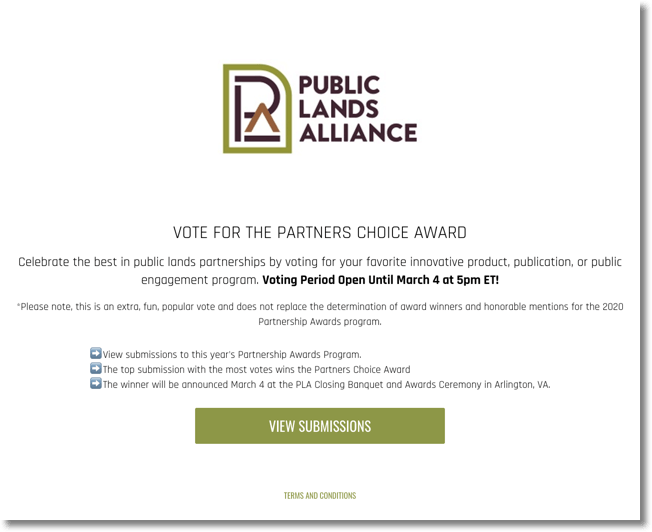
After entering the voting page, participants could browse all nominees and vote for their favorite.

- You want the public to nominate their colleagues – if you’re still looking for potential winners, ask your social media followers to nominate family members, friends, coworkers, neighbors, or even themselves. Invite them to submit their nominations through an Easypromos Photo Contest. Once you have a list of nominees, run it by the public and let them choose the winner of your online awards.

Here’s an example of the 2024 Romanian Visual Awards. The competition rewards the best Romanian photographers in a variety of categories like landscape, wildlife, analog, etc. The ease of participation helped make the contest a success, with more than 1,300 participants and over 1,500 submitted projects.
Did you know that Easypromos includes an advanced fraud control system designed specifically for voting contests? We developed it to detect suspicious activity and help ensure fair and transparent voting.
Attract candidates and voters with attractive prizes and incentives
As you probably already know, prizes are one of the main motivators for participating in a giveaway or promotion. The same principle applies to online voting campaigns. If you want to reach a broad audience and attract as many candidates and voters as possible, participation incentives can play an important role in the success of your campaign.
But what’s the best prize? It should appeal to your target audience and be relevant to your industry or business. Your own products or discount coupons are often a good option, but tech gadgets and unique experiences are also popular incentives.
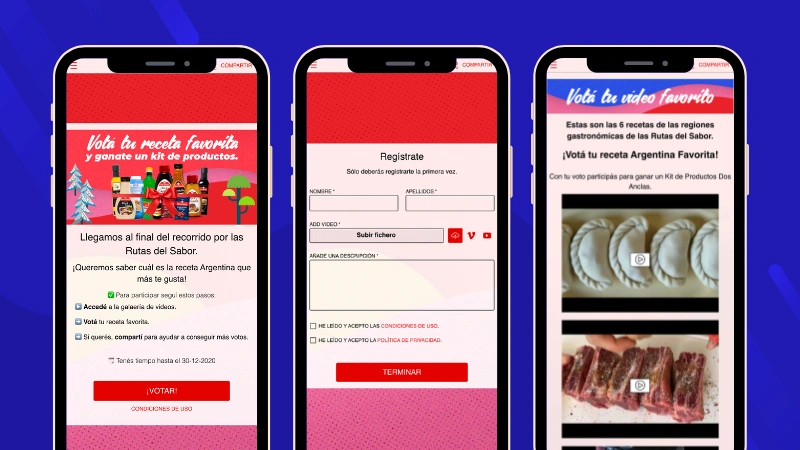
Here’s an example from Dos Anclas and their recipe video contest. To encourage voting, they raffled off a bundle of their products among participants.
Online voting to follow up an offline action
Another great example is this action by El Ingenio Shopping Center, which organized a casting to find three families to star in its upcoming fashion campaigns. Participating families had to visit the mall and take a photo at the campaign’s branded photocall. The shopping center then uploaded all the photos to a microsite, allowing the public to vote and choose the winning family. This type of campaign is an excellent way to involve customers in important brand decisions.

Ready to Launch Your Online Voting Contest?
Online voting contests can help increase visibility, engage communities, recognize achievements, and involve audiences in important decisions. Whether you’re organizing an awards program, a public vote, a photo contest, or a community initiative, the right voting system can help you manage participation while maintaining transparency and trust.
With Easypromos, you can create and manage online voting contests with voter registration, fraud control, categories, voting stages, rankings, and customizable participation flows from a single platform.
Have a specific voting campaign in mind? Contact us via live chat or request a video call to discuss your goals. We’ll be happy to review your use case and help you choose the right voting mechanics for your audience and objectives.

Online Voting Contest FAQs
How do I create an online voting contest?
To create an online voting contest, first define what participants will vote on: photos, videos, projects, nominations, ideas, posters, recipes, or award finalists. Then configure the voter registration process, voting frequency, campaign dates, categories, and winner selection criteria. With Easypromos, you can create a fully customizable voting contest as a microsite without coding.
What do I need to organize an online voting contest for awards?
A successful awards voting contest requires a clear structure: categories, candidates, voting period, participation rules, voter registration, and winner selection criteria. You should also decide whether the voting will be public or private, whether rankings will be visible, and whether the final winner will be chosen by the public, a jury, or a combination of both.
How can I prevent fraudulent votes in an online voting contest?
The most effective way to prevent fraud is to identify voters and apply security measures such as email verification, vote limits, temporary email blocking, suspicious IP detection, and voting pattern analysis. It’s also advisable to include rules that allow organizers to review or remove fraudulent votes if necessary.
Should I allow one vote per user or daily voting?
It depends on your campaign objective. If your priority is strict vote control, a single vote per user is usually the best option. If you want to increase repeat visits and keep participants engaged throughout the campaign, daily voting can be effective when combined with appropriate fraud control measures.
Can I create an online voting contest with multiple categories?
Yes. Many voting contests include multiple categories based on themes, products, geographic areas, participant types, or award groups. Managing categories separately makes it easier to organize candidates, display rankings, and select multiple winners within the same campaign.
Can I hide rankings or vote counts?
Yes. Many organizers choose to hide rankings or vote counts during part or all of the voting period. This can help reduce competitive pressure, discourage fraudulent practices, and maintain excitement until the final results are announced.
Can I combine public voting with a jury?
Yes. A common approach is to use public voting to select finalists and then allow a jury to choose the final winner. Some contests also assign different weights to public votes and jury evaluations. This approach combines audience participation with expert assessment.
Why use a dedicated platform for online voting contests?
A dedicated voting platform provides greater security, control, and flexibility than basic forms or manual processes. It allows organizers to manage candidates, voter registration, vote limits, categories, rankings, voting stages, and fraud control measures from a single environment, helping ensure a reliable and professional voting experience.